
The event is now called London Open Gardens, and the 2027 weekend falls on 5 and 6 June. One ticket covers both days and every garden in the programme, which in 2026 meant more than 120 gardens that stay locked for the other 363 days of the year.
For most of its life it was the Open Garden Squares Weekend, and that is still the name people type into a search box. The charity that runs it, London Parks & Gardens, dropped the "squares" because the programme long ago stopped being only about railed squares in Belgravia. A modern year includes allotments, roof terraces, livery company courtyards, a nature reserve, a community food garden and a plant rescue nursery.
What stays open for the other fifty-one weekends is on our page about London's secret gardens. Here we deal with the weekend itself: how the ticket works, why picking the wrong day wastes a morning, and which gardens you cannot simply walk into with a ticket in your hand.
London Open Gardens at a glance
- 2027 dates
- Saturday 5 and Sunday 6 June
- Gardens
- More than 120 in 2026, across eleven boroughs and the City
- Ticket
- One weekend ticket covers both days and all gardens
- Children
- Free for 11 and under, booked in advance; £10 for 12 to 17 in 2026
- Run by
- London Parks & Gardens, a registered charity
- Scale
- Roughly 40,000 visits made by ticket holders each year
What one ticket buys, and the three things it does not
A single weekend ticket admits one person to every participating garden, on either day or both. You show it to a volunteer steward at each gate; the emailed booking confirmation on a phone screen counts, so nothing has to be printed. Tickets are sold online only, and they remain on sale right through the weekend, including on the Sunday morning.
Three things sit outside that ticket. The first is the guided programme: walks, cycle tours and behind-the-scenes talks are open to ticket holders only and cost £5 each on top, and they are booked in advance. In 2026 that booking closed on 3 June, three days before the weekend, so they are not something to decide on the day.
The second is the handful of gardens that need a separate booking or a ballot place for access or security reasons, covered in its own section below. The third is refreshments. Many gardens sell tea and cake, some sell plants, and a few have live music, but none of that is included.
There is a strict no-refund policy, and the charity does not offer cancellation cover. The ticket is a donation as much as an admission: every penny goes to the charity's work on London's green spaces, and a share of the proceeds is passed back to the participating community gardens.
Two adult tickets can cover a family of four. Children of 11 and under go free, though their free tickets still have to be reserved beforehand and only work alongside an adult ticket holder. Twelve to seventeen-year-olds paid £10 in 2026.
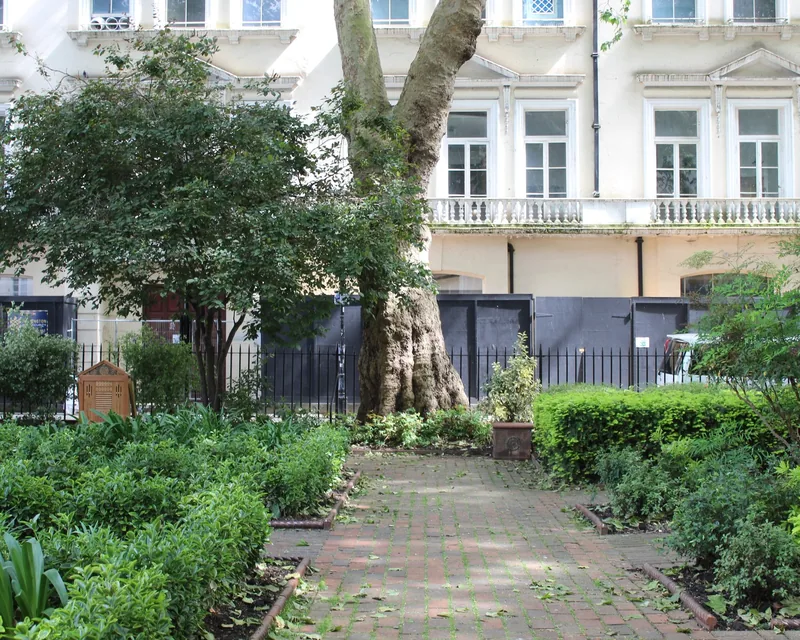
The day split, which is where most visitors go wrong
If you remember one thing from this page, make it this one. Gardens do not open for both days. In 2026, a clear majority opened on only one of the two, and the hours varied wildly, from a 9am start to a 6pm finish, with plenty closing at 4pm.
Belgrave Square, Eaton Square, Lincoln's Inn Gardens and Montagu Square all opened on the Saturday only. Fitzroy Square, the Inner Temple Garden, Ladbroke Square, Kensington Square and the Middle Temple opened on the Sunday only. The Phoenix Garden in St Giles and Iliffe Yard in Walworth opened on both, and Iliffe Yard stayed open until 7pm on the Saturday, which made it the last stop of the day.
The consequence is that you cannot plan a route from a map of garden locations. You have to plan from the opening table, day by day, and the organiser publishes a garden selector tool each spring that filters by day, opening time, location and type of garden. A free printed map guide, A5 folding out to A2, is handed to ticket holders at the gates, and the same guide goes online as a PDF from April.
Turning up at a Saturday garden on the Sunday is not recoverable. These are private gates staffed by volunteers for a few hours, not attractions with flexible hours. Check the day and the closing time for every garden on your list before you leave the hotel.
The gardens you cannot simply walk into
A small number of sites cap their numbers. In 2026 the Battersea Roof Gardens above Battersea Power Station admitted ballot winners only, and the winners were notified on 25 May, a fortnight before the weekend. The garden tours at the Aga Khan Centre in King's Cross sold out. So did 30 Cannon Street in the City.
Others manage the crowd rather than closing it. 25 Cannon Street admitted visitors at regular intervals with a last entry at 3pm. The Garden at 120, a free City roof terrace, opened from 9am to 10am exclusively for Open Gardens ticket holders, ahead of its usual opening time for everyone else.
The pattern is consistent: the corporate roof gardens and the institutional sites are the ones that fill. If one of those is the reason you are buying a ticket, get on the charity's email list in the spring, because ballots and extra bookings are announced there and nowhere else.
Where the gardens actually are
The programme is concentrated in a band of central and inner London, and it thins out fast beyond it. Eleven boroughs and the City of London took part in 2026.
| Borough | What it is strong on |
|---|---|
| Westminster | The grand squares: Belgrave, Eaton, Portman, Montagu, Bryanston, Chester, Warwick |
| Kensington & Chelsea | The largest single cluster, from Notting Hill communal gardens to the Earl's Court squares |
| City of London | Livery halls, roof terraces and the Inns of Court gardens |
| Camden | Bloomsbury squares, allotments and institutional gardens |
| Islington and Hackney | Community gardens, allotments and small nature sites |
| Tower Hamlets | Community food gardens and memorial gardens, several of them new each year |
| Southwark and Lambeth | A short list: Bankside, Walworth, Trinity Church Square, Merrick Square |
| Hammersmith & Fulham | Writers' houses, allotments and glasshouses along the river |
| Haringey and Wandsworth | Three or four each: small private and charity gardens in the north, roof gardens and club grounds in the south |
Note what is missing. There is almost nothing in south-east London beyond Southwark, nothing in the outer east or the far north, and only a couple of sites west of Hammersmith. If you are staying outside that band, the weekend will cost you a lot of travelling time.
Four routes that work on foot
Because the gardens are small and clustered, the weekend rewards walking rather than riding. Four groupings hold up year after year.
The Kensington and Chelsea squares. Earl's Court Square, Nevern Square, Barkston Gardens, Collingham Gardens and Courtfield Gardens sit within ten minutes of each other, and our guides to Earl's Court and West Brompton and to staying in Kensington and Chelsea cover the streets in between. Further north, Ladbroke Square, Rosmead Garden, Stanley Crescent and Norland Square are the communal gardens behind the pastel terraces of Notting Hill, and the Museum of Brands has opened its own garden in the same weekend.
The City on a Sunday. The Inner Temple Garden, the Master's Garden and Middle Temple all open on the Sunday afternoon, within the same set of lanes covered by our page on Temple Church and the Inns of Court. Add the livery company gardens at Drapers' Hall and the Stationers' Company, and the roof terraces on Cannon Street, and you have a full afternoon within half a mile.
Bloomsbury and Clerkenwell. Bedford Square, Mecklenburgh Square, Montague Street Gardens and the Royal College of Physicians' garden of medicinal plants are all a short walk apart in Bloomsbury, with the courtyard gardens of the Charterhouse on the eastern edge.
The East End community gardens. The least grand and often the most interesting: allotments, food gardens and small reserves around Bethnal Green and Hackney, usually staffed by the people who dug them. This is the part of the programme that has grown most, and the part where the entry fee most obviously reaches the ground it was raised for.
What a garden actually feels like when you get inside
Manage your expectations on scale. A London garden square is typically the size of a football pitch or smaller, and a roof terrace considerably less. Twenty minutes is a full visit for most of them, and an hour is a long one. Nine or ten gardens is a realistic day; trying for twenty means seeing gates rather than gardens.
The atmosphere is closer to a village fete than a botanical collection. Volunteers sit at a trestle table by the gate, residents hand out tea and home-made cake, and somebody who has looked after the borders for thirty years will tell you about them if you ask. That conversation is most of the value.
Practical points: toilets are rare and are listed garden by garden in the selector tool, as are picnic rules and whether dogs on leads are allowed. There is photography and filming at the event, and you can ask a photographer not to include you.
Access, children and what to bring
Access varies enormously, because these are private gardens rather than public venues. Some are level lawns through a wide gate; others are reached down basement steps or through a narrow side passage. The charity publishes access details supplied by each garden in the spring, and there is no general guarantee.
Free companion tickets are available for anyone who needs a carer, arranged by email with the ticketing team once you have a booking reference. Children under 12 are free but still need a ticket booked in advance, and they cannot be admitted without an adult ticket holder.
Bring a refillable bottle, cash for cake and plant stalls, and comfortable shoes. Some gardens will take £5 in cash at the gate for entry to that one garden, which is useful if a friend joins you unexpectedly, but it buys nothing beyond that single gate.
If you cannot be here in June
Two weekends a year open most of the city's locked doors, and they sit at opposite ends of the summer. This one takes the gardens in early June; Open House Festival takes the buildings in September. Between them, London Design Festival opens design studios and industrial buildings that are shut the rest of the year, on much the same self-guided model, and the free outdoor performance festival in the south-east does the same for public squares in late August.
For gardens that are open without waiting for a weekend, Chelsea Physic Garden charges admission and closes on Saturdays, the Garden Museum at Lambeth combines a small collection with a walled churchyard garden, and the Chelsea Flower Show in late May is the ticketed alternative if show gardens rather than real ones are what you are after. The rest of London's green space is on our parks and gardens page, and London in June sets the weekend against everything else that month.
Frequently asked questions
Is it still called Open Garden Squares Weekend?
No. The event is now London Open Gardens, run by London Parks & Gardens. The old name is still widely used in travel articles and search results, and the charity's own pages use the current one, so search for London Open Gardens if you want the official listing and the garden selector.
When is London Open Gardens 2027?
The weekend of 5 and 6 June 2027, a Saturday and a Sunday. Early June is the fixed slot, and the charity announces the dates on its own website well in advance. Ticket prices for the year go up in the spring, along with the garden list and the printed map guide.
How many gardens can you realistically see in a day?
Nine or ten, if you pick a cluster and walk between them. Most gardens take about twenty minutes, but the gaps between them, the queues at the popular roof terraces and the varying closing times all eat into the day. Attempting to cross London between gardens is the fastest way to see fewer of them.
Do I need a separate ticket for each garden?
No. One weekend ticket admits you to every garden in the programme, and you show it to the steward at each gate. The exceptions are a small number of sites that run a ballot or require an additional booking for access or security reasons, and the guided walks and tours, which cost £5 each on top.
Can you buy a ticket on the day?
Yes, but only online. Tickets stay on sale through the weekend, including on Sunday morning, and there is no box office. Some individual gardens will accept £5 in cash at their own gate, but that admits you to that garden alone and gives you no access to the rest of the programme.
Sources
- London Parks & Gardens - London Open Gardens (checked September 2026)
- London Parks & Gardens - participating gardens and opening times, 2026 (checked September 2026)
- London Parks & Gardens - the charity behind the weekend (checked September 2026)
- London Parks & Gardens - official ticket listing and visitor FAQs, 2026 (checked September 2026)