
An aparthotel is a hotel whose rooms have kitchens. You get a reception desk, cleaning and a proper lock on the front door, plus a hob, a fridge and usually a washing machine. For a family, a stay of a week or more, or anyone who cannot eat out three times a day, it is often the best value in London. For two nights it rarely is, because the price sits above a hotel room and you will barely use the kitchen.
The words are used loosely. A serviced apartment is a flat in a building run as a business, with staff on call and regular cleaning. An aparthotel is the same idea built as a hotel: a reception, a lift, a corridor of doors, and a kitchenette in the corner of each room. Both are companies rather than individuals, which is the practical difference from renting a flat from a private host.
Our guide to apartments and short lets in London covers the private-host side, the 90-night planning rule and how rental scams work. This page assumes you have decided you want a kitchen and a company behind it, and goes into what you actually get, what it costs and what goes wrong.
Aparthotels and serviced apartments at a glance
- What makes one
- Self-contained accommodation with a kitchen, run as a business with staff
- Usually included
- Kitchen equipment, linen, towels, wi-fi, a weekly clean, often a washer-dryer
- Usually not included
- Daily housekeeping, breakfast, parking, groceries or a welcome pack
- Best value from
- About four nights for a family, a week for a couple
- The 28-day rule
- From the 29th night of a continuous stay, VAT is charged only on the non-accommodation part, so monthly rates drop sharply
- Main risk
- No one on site late at night, and no daily clean unless you pay for it
The three models, and which one answers the phone
When the heating fails at ten at night, the difference between these is the whole difference.
| Type | Who is on site | Cleaning | Typical size | Suits |
|---|---|---|---|---|
| Aparthotel | A reception desk, often 24 hours | Daily or every few days, like a hotel | Studio or one bedroom | Couples, business stays, anyone who wants hotel service with a kitchen |
| Serviced apartment block | Staff during office hours, an on-call number outside them | Weekly, with extra cleans charged | One to three bedrooms | Families, longer stays, groups |
| Managed flat let by an agency | Nobody. A phone number and a key box | At the start and end only | Whatever the flat is | Price-led stays where you accept the risk |
Listings blur the categories deliberately, so judge by the answers rather than the label. Ask three questions before you book: is there a staffed desk, and at what hours; who answers the phone at midnight; and how often is the flat cleaned. If the replies are vague, you are in the third row of that table whatever the website says.
What "studio" and "sleeps four" really mean
The sleeping arrangement is where most disappointment starts, and the vocabulary is consistent enough to decode.
- Studio. One room. The bed is in the same space as the sofa and the kitchen. Fine for one or two people; hopeless if one of you wants to sleep while the other reads with a light on.
- One bedroom. A separate bedroom with a door, plus a living room with a sofa bed. This is the configuration families want, because the children go to bed at eight and the adults do not.
- "Sleeps four." Almost always two real beds and a sofa bed, not four beds. Ask how many bedrooms and how many proper beds, in writing.
- Twin or double. In a one-bedroom flat the bedroom is usually a double; a twin version may exist but is rarer and needs requesting.
Ask for the floor area in square metres as well. A London studio can be anything from about 20 square metres, which is small but workable, to 40, which is spacious. If the listing gives no figure and no floor plan, assume the lower end.
What is actually in the kitchen
This is the question that decides whether the kitchen earns its price. "Kitchenette" and "fully equipped kitchen" describe very different objects, and the gap between them is an oven.
| What the listing says | What you normally get | What you can cook |
|---|---|---|
| Kitchenette | Two induction or ceramic rings, a microwave, a small fridge, a kettle, a toaster, a sink | Breakfast, pasta, eggs, reheated food. No roasting, no baking |
| Fully equipped kitchen | Four rings, an oven or a combination microwave, a full fridge with a freezer compartment, often a dishwasher | Proper meals for a family |
| Nothing specified | Assume the first row | Ask before booking |
Four details worth confirming for a longer stay: whether there is an oven at all; whether the freezer is a real compartment or an ice box; how many plates, pans and glasses there are, since a "sleeps four" flat sometimes has crockery for two; and whether there is an extractor, because cooking smells in a studio with sealed windows are memorable in the wrong way.
Nothing comes with food. A few operators leave a welcome pack of tea, coffee, milk and washing-up liquid; most do not, and salt, oil and foil are on you. Budget an hour on arrival for a supermarket shop, and note that London's markets are a pleasant alternative for the first evening: see our guide to London's food markets. Visitors who cook because they must, rather than to save money, should also read our page on gluten-free eating in London.
How serviced is "serviced"?
In a hotel, someone comes in every day. In most serviced apartments they do not, and this surprises people more than anything else about the category.
The common pattern is a weekly service: a clean, fresh bed linen and fresh towels, once every seven days, with extra visits available at a charge. Aparthotels with a hotel licence often do more, sometimes daily. What you should establish before arrival is the frequency, what a service includes, whether towels are changed between services, and whether you are expected to put the rubbish out yourself, which in a London block can mean finding a bin store two floors down.
On longer stays this is the thing to negotiate. A mid-stay clean on a fourteen-night booking costs far less than you think and transforms the second week.
The washing machine is the underrated feature
Hotel laundry in London is charged per item and is expensive in every price bracket. A washer-dryer in the flat removes that cost entirely, and it is the reason many people on stays of ten days or more choose an apartment over a hotel room.
Check whether the machine is in the flat or in a shared laundry room, whether it is a washer-dryer or a washer only, and whether the dryer is a condenser, because British flats rarely have outside space and a washer with no dryer means a wet living room. If the building has a shared laundry, ask whether it is coin-operated or free. Our guide to doing laundry in London covers the alternatives if the answer is no.
At how many nights does a kitchen pay for itself?
Aparthotels usually cost more per night than an equivalent plain hotel room in the same district, and less than two hotel rooms. The saving comes from what you stop buying.
Work it out like this, using your own figures. Add the nightly difference between the apartment and the hotel room across your whole stay. Then subtract what you will genuinely stop spending: breakfast for everyone, one evening meal in three or four, the drinks you would have bought at a bar rather than the flat, and the laundry. For two adults the crossover usually arrives at about a week. For a family of four it arrives much sooner, often by the third or fourth night, because a family pays four breakfasts and needs two hotel rooms.
Be honest about how much you will cook. Visitors on a short break in London eat out because the eating out is part of the trip, and a kitchen used twice is an expensive shelf. Our breakdown of what a London trip costs gives the wider numbers, and hotel extras and hidden costs covers what a hotel rate leaves out on the other side of the comparison.
Why the rate falls after 28 nights
This is a genuine quirk of the UK tax system, it is written into HMRC's own guidance, and almost no visitor knows about it.
VAT on accommodation is normally charged at 20%. But under what HMRC calls the reduced value rule, when a guest stays in the same establishment for a continuous period of more than 28 days, from the 29th day the supplier charges VAT only on the part of the payment that is not for the accommodation itself. Meals, drinks and services remain taxable, and at least 20% of the remainder must be treated as being for facilities and taxed as well. The first 28 days are charged with VAT in full.
The effect is that the tax on a long stay falls by a large fraction from the fifth week, which is why serviced apartment companies quote much lower weekly rates once a booking passes a month. Two practical consequences:
- If your stay is around four weeks, ask what a 29-night booking costs. A longer booking can genuinely be cheaper than a shorter one.
- The stay must be continuous and in the same establishment. Moving buildings halfway through restarts the clock. HMRC allows limited absences, such as an occasional weekend away, without breaking continuity.
Do not expect a hotel to volunteer this. Ask for the long-stay rate by name.
A 29-night booking can cost less than a 26-night one. Because the tax treatment changes from the 29th day of a continuous stay, the difference between four weeks and four weeks and a day is not three extra nights of rent. If your plans are near that line, ask the operator to price both.
Arriving when there is no one at the desk
An aparthotel with a 24-hour reception behaves like a hotel and needs no special planning. Everything else does.
Establish, before you travel, how you get in: a key box with a code, a smart lock, a concierge in the building lobby, or a member of staff who meets you. Get a phone number that will be answered at the hour you expect to arrive, and get it as a phone number, not only as a message inside a booking platform, because your phone may have no data when you land. Tell the operator your flight number and expected arrival time if you are coming in late.
Ask also about the building itself. Many London apartment buildings have a concierge for residents who is not allowed to hand out keys, a lift that needs a fob, and a street door that locks at a set hour. And expect to give your name and nationality on arrival: the Immigration (Hotel Records) Order 1972 applies to any premises providing sleeping accommodation for payment, not only to hotels. Our guide to booking safely covers deposits, card holds and what to do if the flat is not as described.
Where London's aparthotels are
They are not spread evenly. The sector grew out of corporate travel, so it clusters where companies are, which is useful to know because those districts are cheapest at weekends.
- The City fringe and Aldgate, with new blocks around Liverpool Street and Tower Hill. Quiet at weekends, excellent transport.
- Canary Wharf and the Isle of Dogs, the densest concentration of serviced apartments in London, mostly modern, mostly with washer-dryers.
- Marylebone, Fitzrovia and Paddington, the central options, often in converted buildings with smaller kitchens.
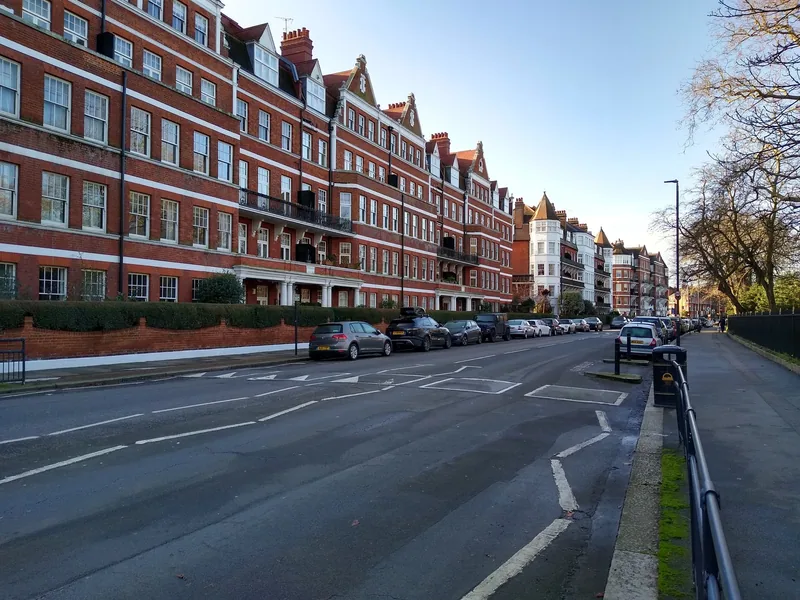
- South Kensington, Earl's Court and Kensington, the traditional long-stay districts for visiting families, in mansion blocks and converted houses.
- Nine Elms and Battersea, Stratford and Wembley, new-build towers with the newest kitchens and the lowest prices, at the cost of being further out.
Prices in this sector move with business demand rather than tourist demand, so the cheap nights are often Friday to Sunday, the opposite of most London hotels. Our page on when to book a London hotel explains that split.
What goes wrong
What they do better than a hotel
- A separate bedroom, so adults and children keep different hours
- Breakfast at your own table and at your own time
- Laundry, which changes what you pack for a long trip
- Space to work, with a table rather than a bed
- A much lower rate from the fifth week of a continuous stay
Where they let you down
- No daily housekeeping, so the flat is as tidy as you leave it
- Nobody on site in many buildings after office hours
- Kitchens smaller and less equipped than the photographs suggest
- Noise from building works, common in the new-build districts
- Charges for extra cleans, late check-out and parking
Two further checks. On accessibility, new buildings are usually good and converted mansion blocks are usually not, and a "lift" in a Victorian conversion can be too small for a wheelchair: see accessible London. And on electricity, UK sockets take the three-pin plug at 230 volts, which matters more here than in a hotel because you will be using kitchen appliances: see plugs, adapters and voltage.
Who should book one
Families with young children get the most out of them, for the separate bedroom as much as the kitchen: our guides to staying in London with children and London with a baby explain why a bath, a kettle and a door that closes are worth more than a concierge. People staying two weeks or longer come next, then anyone with a dietary requirement that makes eating out tiring, then business travellers who want somewhere to sit in the evening.
Who should not: anyone on a two or three-night break who will be out from nine until midnight, for whom a small central room is better value. If that is you, compare compact and pod hotels, which sell the location rather than the space, and see our comparison of London's areas for where to put yourself.
Frequently asked questions
What is the difference between an aparthotel and a serviced apartment?
An aparthotel is built and run as a hotel, usually with a reception desk and hotel-style cleaning, but its rooms have kitchens. A serviced apartment is a flat in a building managed as a business, generally larger, with staff on call rather than at a desk and cleaning once a week. Both are companies, unlike a flat let by a private host.
Are aparthotels cheaper than hotels in London?
Not per night, as a rule. They are usually dearer than an equivalent plain hotel room and cheaper than two rooms. The saving comes from breakfast, some evening meals and laundry, so it grows with the length of the stay and the size of the party. For a family of four the crossover often arrives by the third or fourth night.
Do serviced apartments in London have washing machines?
Many do, either in the flat or in a shared laundry room in the building, and it is one of the main reasons to choose one for a long stay. Do not assume: check whether it is in your flat, whether it dries as well as washes, and whether a shared machine is free or coin-operated.
Do I get my room cleaned every day?
Usually not. The common arrangement is a weekly service with fresh linen and towels, and extra cleans available at a charge. Aparthotels run on hotel lines often clean more frequently. Confirm the frequency before you book, and consider paying for a mid-stay clean on any booking of two weeks or more.
Why do long stays in London apartments cost less per night?
Partly demand, and partly tax. Under HMRC's reduced value rule, once a guest has stayed in the same establishment continuously for more than 28 days, from the 29th day VAT is charged only on the part of the payment that is not for accommodation, with at least 20% of the remainder still taxable. Ask for the long-stay rate if your trip is near a month.
Is a serviced apartment affected by London's 90-night short-let rule?
No. That planning rule applies to residential homes let as temporary sleeping accommodation. Serviced apartments and aparthotels are operated as businesses in premises used for that purpose, which is one reason their bookings are less likely to be cancelled at short notice than a private flat's.
Sources
- HMRC - Hotels and holiday accommodation (VAT Notice 709/3) (checked September 2026)
- GOV.UK - Tax on shopping and services (VAT rates) (checked September 2026)
- VisitEngland - Quality schemes, including serviced apartments (checked September 2026)
- legislation.gov.uk - The Immigration (Hotel Records) Order 1972 (checked September 2026)
- legislation.gov.uk - Deregulation Act 2015, section 44 (short-term use of London accommodation) (checked September 2026)
- Competition and Markets Authority - Providing clear and accurate information about prices (checked September 2026)