
The Ragged School Museum is open Wednesday to Sunday, 10am to 5pm, in three canalside warehouses on Copperfield Road in Mile End. Entry is £5 for an adult and £2.50 for a child, with a £10 family ticket, and the whole building is step-free with a lift to every floor. The reason to come is a reconstructed Victorian classroom, and on the first Sunday of the month an actor in costume teaches a lesson in it.
From 1877 these warehouses held the largest ragged school in Victorian England: a free school, opened by Dr Barnardo, for children whose families could pay for nothing. It ran for thirty years, and the museum makes no grander claim for it than that it served some of the poorest children in the East End.
It then shut for years. A £4.8m grant from the National Lottery Heritage Fund, awarded in 2020, paid for a full restoration - the museum's director notes the project was three days old when the first national lockdown began - and the buildings reopened with a new roof, better access and a café on the towpath. What follows is what is inside now, what it costs, and whether the journey out to Mile End is worth making with children.
Ragged School Museum at a glance
- Address
- 46–50 Copperfield Road, London E3 4RR
- Open
- Wednesday to Sunday, 10:00–17:00. Closed Monday and Tuesday
- Adult
- £5.00
- Child / concession
- £2.50
- Family ticket
- £10.00
- Victorian lesson
- First Sunday of the month; tickets issued at the museum, not in advance
- Nearest station
- Mile End (Central, District, Hammersmith & City), about ten minutes through the park
- Access
- Step-free throughout; a lift reaches all floors
Two days a week the door is locked. The museum is closed on Mondays and Tuesdays. Prices above are the ones the museum published in June 2026; it is a small charity and they can move, so ring 020 8980 6405 if a few pounds either way matters to your day.
The classroom, and why it is the whole point
The museum calls the classroom its unique room, and the figure it gives is that some 16,000 children a year come to it on school visits. That is a working teaching space rather than a display case, which is why it looks used rather than staged: long benches and desks facing a blackboard, in a room whose proportions belong to a warehouse floor.
If you come as a family on any ordinary opening day you can walk in, sit at a desk and look at it. That takes ten minutes. The reason to pick your day carefully is the lesson.
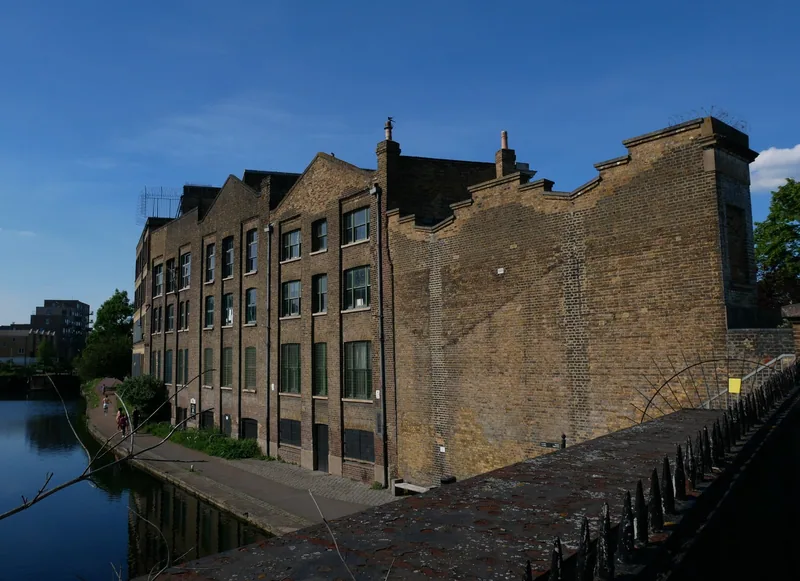
Photo: Ethan Doyle White · CC BY-SA 4.0 · Wikimedia Commons · resized
First Sunday: the lesson in costume
On the first Sunday of each month the museum runs its Victorian lesson in that classroom, taught by an actor in Victorian dress, in character, for about 45 minutes. The museum's own description promises it works for anyone from five to eighty-five, and on this it is not overselling: the format is a real lesson with real Victorian discipline, and adults who arrived indulging their children tend to end up answering questions.
Two things about it are worth knowing before you arrive. Capacity in the classroom is limited, and tickets for the lesson are not sold in advance - you collect one at the desk when you get there, first come, first served. The museum has run the lesson at two sittings before lunch; since the restoration we have not been able to confirm the current start times from the live site, so telephone on the Friday if you want a particular sitting. Groups should ring ahead in any case.
Turning up at noon on the first Sunday is how families miss the lesson. The classroom holds a fixed number and the sittings are before lunch. Arrive at opening, take your lesson ticket at the desk, and spend the wait on the other floors rather than the other way round.
What else is in the building
The museum is small and does not pretend otherwise. Alongside the classroom, the restored floors carry displays on the ragged school movement and on the children taught here, and a local history section about this stretch of the Regent's Canal.
The other thing to find is Forgotten Tale, an installation by the artist Clarisse d'Arcimoles, who recreated a life-size, three-dimensional version of a black-and-white photograph of a Spitalfields home in 1902. You walk into a room that is a photograph. It is the most memorable ten minutes in the building for anyone over about twelve, and it does what the classroom cannot: it shows the home the children went back to.
There is also a music programme, the Ragged Music Festival, and a changing art programme in the restored spaces. Both are worth a glance at the museum's listings if you are in east London anyway; neither is a reason to travel on its own.
How long it takes, and what it costs a family
On an ordinary Wednesday to Saturday, allow an hour. The classroom, the kitchen, the displays and Forgotten Tale do not fill more than that unless your children are the sort who read every caption. On a first Sunday, allow two to two and a half hours, because the lesson itself is 45 minutes and you will probably be waiting for a sitting.
Two adults and two children pay £15 on individual tickets, so the £10 family ticket is the obvious buy for anyone bringing more than one child. At that price it is among the cheapest paid museums in London; for the alternatives that charge nothing at all, see our guide to free museums in London.
Getting to Copperfield Road
The entrance is on Copperfield Road, not on the towpath - the canal-side door is not always open, so do not plan to arrive that way. From Mile End station, served by the Central, District and Hammersmith & City lines, turn left out of the station, walk to the crossroads, cross towards the bridge and turn left before it into Mile End Park. The path through the park brings you down to the museum in about ten minutes. Our guide to the Central line covers the journey out from the middle of town.
From Limehouse on the DLR you can walk north along the Regent's Canal towpath instead, which is a better approach in good weather and a longer one. Buses that put you within a few minutes include the 309, which stops on Copperfield Road itself, and the 277, D6 and D7 towards Eric Street. The 25 stops by the canal, the 323 on Bow Common Lane and the 339 on Harford Street. For the canal as a walk in its own right, see our guide to Little Venice and the Regent's Canal.
Step-free, and genuinely so
This is one of the few Victorian buildings in London where the access claim is straightforward: the restoration made the building step-free throughout and put in a lift that reaches every floor, including the classroom. Mile End station itself, however, is not step-free, so check the route on our guide to step-free and accessible transport in London before you set out, and consider the bus.
The café, and lunch on the towpath
The museum's own café, Forno - Ragged Cafe, opens onto the canal towpath and holds a hygiene rating of 3 from its inspection in December 2025. It is the practical option with children, because the alternative is a walk. Mile End is not a restaurant district; the nearest concentration of places to eat is up towards Roman Road or west towards Whitechapel, and both are a proper detour rather than a stroll.
What to put around it
A morning at the Ragged School does not fill a day, and it sits in a part of London where the other things to do are outdoors. Victoria Park is a twenty-minute walk north along the canal and has the playgrounds. Tower Hamlets Cemetery Park, a short way south-east, is a Victorian burial ground now run as woodland, and it makes a quiet counterpoint to the classroom.
Going the other way, Whitechapel and the East End is two stops on the Tube, and London Museum Docklands is free and covers the river trade that paid for these warehouses. For Victorian childhood of a different class, the Charles Dickens Museum in Bloomsbury is the house where Oliver Twist was written, and the Foundling Museum nearby tells the story of abandoned children a century before Barnardo. All three are better with a child who already knows the period.
If you are building a half-term around small museums, our guide to London in the school holidays explains which weeks to avoid, London with kids has the wider plan, and there is a longer list in London's best small museums. Two others in that bracket, both worth checking opening days before you travel, are the Museum of Water and Steam in Brentford and the Fashion and Textile Museum in Bermondsey.
Is it worth the journey?
With a child between about six and twelve who has met the Victorians at school or in a book, yes, and particularly on a first Sunday. The lesson is the only thing of its kind in London and it costs almost nothing. Without a child, it is a forty-minute museum in a good building, and you would be better served by the Docklands collection or by the East End walk.
What it is not is a wet-weather fallback for a family staying in the centre. Mile End is twenty minutes out, the museum closes at five, and it shuts on the two days most visitors have spare. Plan it, or leave it.
Frequently asked questions
How much does the Ragged School Museum cost?
£5 for an adult, £2.50 for a child or concession, and £10 for a family ticket, on the price list the museum published in June 2026. It is a small independent charity, so confirm by telephone if the exact figure matters. Entry includes the Victorian classroom and the rest of the displays.
What days is the Ragged School Museum open?
Wednesday to Sunday, 10am to 5pm. It is closed on Mondays and Tuesdays all year. The monthly Victorian lesson runs on the first Sunday of the month, and the museum has opened on Good Friday, Easter Saturday and Easter Sunday while closing on Easter Monday.
Can you book the Victorian lesson in advance?
No. The museum does not take advance bookings for the lesson and operates first come, first served: you collect a lesson ticket at the desk when you arrive. The classroom's capacity is limited, so come at opening time on a first Sunday if you want a place. Large groups should telephone before visiting.
Is the museum suitable for a wheelchair or a pushchair?
Yes. The restoration made the building step-free throughout, with a lift to all floors including the classroom. The complication is the journey: Mile End Underground station is not step-free, so a bus or a step-free route planned in advance is the safer approach.
How long should I allow for a visit?
About an hour on a normal opening day. On the first Sunday of the month allow two to two and a half hours, because the Victorian lesson lasts 45 minutes and you may have to wait for a sitting. Children who want to do the lesson twice are the reason some families stay longer.
Sources
- Ragged School Museum - Plan your visit: information, prices and opening hours (read via the Internet Archive copy of 3 June 2026, because the live site blocks automated access; checked September 2026)
- Ragged School Museum - home page (Internet Archive copy of 31 August 2026)
- Ragged School Museum - Our refurbishment (Internet Archive copy of 3 June 2026)
- Ragged School Museum - First Sunday Victorian Lesson (Internet Archive copy of 21 July 2024)
- Food Standards Agency - food hygiene rating register (Forno - Ragged Cafe, 46-50 Copperfield Road, rated 3 on 3 December 2025) (checked September 2026)