
The Charles Dickens Museum fills a Georgian terraced house at 48–49 Doughty Street, where the young novelist lived with his growing family and finished Oliver Twist. It opens Wednesday to Sunday, costs £14 for an adult, and takes most people about ninety minutes.
Dickens rented the house in 1837, when he was twenty-five and suddenly famous, and left in 1839 for somewhere larger. Every other address he occupied in London has been demolished, so this is the one building where you can stand in his rooms. The house gets a paragraph in our survey of the city's smaller collections; this page is about what a visit actually involves: the ticket rules, the staircases, the tearoom and which floor rewards the climb.
It is a real house rather than a gallery with a theme, which is both its charm and its limitation. Rooms are furnished as a middle-class Victorian family would have had them, with Dickens's own possessions placed among ordinary things: a washstand, a servant's bed, jars of dried herbs in the basement. Nobody hands you a headset and tells you where to go.
Doughty Street at a glance
- Address
- 48–49 Doughty Street, Bloomsbury, London WC1N 2LX
- Open
- 10am to 5pm, Wednesday through to Sunday. Closed Monday and Tuesday. Last entry one hour before closing
- Adult ticket
- £14.00 (September 2026); concession £12.00; child 6–16 £8.00; under-6s free
- Booking
- Entry is released in 15-minute slots. Walk-ups are sold, but you may wait if the house is full
- Time needed
- About 1 hour 30 minutes for the house, longer with the tearoom and garden
- Nearest stations
- Russell Square (Piccadilly line) and Chancery Lane (Central line), both about 10 minutes on foot
What £14 buys, and who pays less
One ticket covers the historic house and whatever temporary exhibition is running in the adjoining rooms at number 49. In September 2026 the museum charged £14.00 for an adult aged 17 and over, £12.00 concession, £8.00 for a child aged 6 to 16, and nothing for under-6s. Check the current figures on the museum's admissions page before you travel, because small charities adjust prices more often than the national museums do.
The concession rate is broader than most. It covers students with a valid card, disabled visitors (no proof is asked for), Blue Light Card holders, and people receiving Universal Credit, Working Tax Credit, Pension Credit, Income Support, PIP or Jobseeker's Allowance. A carer accompanying a ticket holder goes in free. Museum members, National Art Pass holders and ICOM or Museums Association members enter free and do not need to book in advance: just show the card at the desk.
Two adults bringing two children aged between 6 and 16 pay £44 in total at the standard rates. There is no permanent family ticket, although the museum has run summer family savers in July and August, so look for an offer if you are visiting in the school holidays. Our guide to visiting London with children has more on where family pricing genuinely saves money.
Two free-entry cards work at the door here. A National Art Pass or an ICOM/Museums Association card gets you in without booking. If you are visiting several paid house museums in a week, one of these can pay for itself faster than any London sightseeing pass.
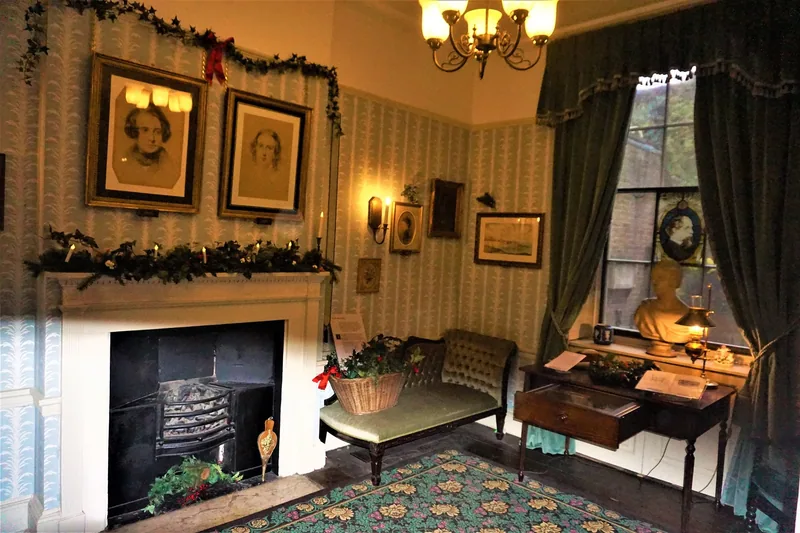
Photo: Joyofmuseums · CC BY-SA 4.0 · Wikimedia Commons · resized
The 15-minute slot system, and what it means for walk-ups
Admission is staggered in quarter-hour intervals. This is a capacity measure rather than a queue-management trick: the staircases are narrow and two of them carry traffic in both directions, so the museum limits how many people are in the house at once.
In practice, booking ahead online is worth the two minutes it takes on a Saturday or during school holidays. On a wet Wednesday in February you can turn up and walk in. If the house is at capacity when you arrive without a ticket, you will be given the next available slot, and the wait is usually short. The tearoom is a comfortable place to spend it.
Large bags and suitcases are refused. Only a small handbag or a small backpack may come in, and a backpack has to be held in one hand or swung round to the front. There is a cloakroom at the entrance, but do not arrive with luggage on your way to King's Cross; the left-luggage options around the main stations are a better plan.
Floor by floor: how the house is arranged
The route is designed as a loop through five levels, and it helps to know the shape of it before you start.
Ground floor. Level throughout, with the Morning Room and the hallway. There is seating in both. This is where the visit begins and where the noise from Doughty Street is most noticeable.
Basement. Down first, not up. The kitchen, the wash-house and the Preparation Room, where dried herbs hang from the ceiling and scent the whole level. It is colder than the rest of the house and lit mostly by artificial light. In summer the cellar door to the outside is propped open. Chairs are provided in the kitchen.
First floor. The Drawing Room, where the family entertained, plus an exhibition room at the back. The accessible toilet is on this level.
Second floor. Quieter still. The Mary Hogarth Room commemorates Dickens's sister-in-law, who died in the house in 1837 at seventeen and marked him for the rest of his life. Behind the exhibition rooms is the Reading Room, which the museum designates as a quiet space, useful if anyone in your group needs a break.
Attic. The nursery and the servant's bedroom, reached by an uncarpeted staircase. Motion-triggered soundscapes play in both rooms, which can startle you if you are not expecting them. In summer the attic gets hot. This is the floor most visitors remember, because it is the one that makes the household's hierarchy physical: the family below, the servant under the roof.
You leave through the second-floor exhibition room of number 49 and come down its staircase to the shop.
Stairs, the platform lift and what is out of reach
Entry from the street, the ticket desk, the shop and the cloakroom are all step-free. Inside, the house has the staircases you would expect in a five-storey Georgian terrace: mostly carpeted, roughly the width and pitch of a domestic stair.
A platform lift connects four of the levels. It has to be operated by a member of staff, so ask at the ticket desk when you arrive and someone will take you up floor by floor. The attic is the one part the lift cannot reach; the museum offers an interactive digital tour of the nursery and servant's room instead, which is a fair substitute but not the same thing.
Some larger powered wheelchairs will not fit through the narrower doorways, and mobility scooters cannot be accommodated at all. Phone ahead on 020 7405 2127 with your measurements and staff will tell you honestly whether it will work. Seating is available on every floor. For the wider picture, see our guide to getting around London as a wheelchair user.
Ask for the lift before you start, not halfway up. It is staff-operated and the route through the house runs downstairs first, so telling the ticket desk at the outset saves you being stranded in the basement.
The tearoom, the garden and Coram's Fields
The tearoom occupies the ground floor of number 49 and opens throughout museum hours. It serves quiche, soup, cakes and soft drinks rather than full meals, and a handful of tables sit outside in a small walled garden that stays surprisingly calm even when the café is busy. Only food bought on site may be eaten there.
Prams and pushchairs cannot go round the historic house. There is a buggy park just before the tearoom where you can leave them folded, at your own risk. If you want to picnic, Coram's Fields is under five minutes away, free to enter and, unusually, admits adults only when accompanied by a child. Our round-up of the best museum and gallery cafés in London covers the grander options nearby.
Families: the hedgehog, the trail and the school holidays
Two free things are worth collecting at the front desk. The family audio guide is narrated by a hedgehog called Bill Spikes and downloads to your own phone on site. The Extra/Ordinary Women trail, suitable from about five upwards, comes with a clipboard and pencil and follows the women in Dickens's household rather than the novelist himself, a better hook for most children than the manuscripts.
During school holidays the museum runs craft sessions, storytelling and special tours. Check the events page before you book a slot, because these are ticketed separately from general admission. Baby changing is in the accessible toilet on the first floor, and feeding is welcome anywhere in the house.
Christmas, and the days the normal timetable does not apply
December is when this museum comes into its own, and the timetable changes to match. For 2026 the museum publishes extended evening opening until 6pm from Wednesday to Sunday between 2 and 23 December, plus four extra Tuesday openings on 1, 8, 15 and 22 December, also until 6pm. A special Christmas Eve event runs on Thursday 24 December. The house is closed on 25 and 26 December, opens on Monday 28 December from 10am to 5pm, and closes again on Friday 1 January 2027. Easter brings one more exception: Monday 29 March 2027, 10am to 5pm.
The museum also runs out-of-hours guided tours of the historic house, sold separately from admission. If you want the rooms without other visitors in them, that is the way to get it. Our seasonal guide to Christmas in London sets the December visit in context, and bank holidays and opening hours explains the wider pattern of closures.
Monday and Tuesday are the trap. Doughty Street is shut on both days for most of the year, and so is Sir John Soane's Museum a mile away. If your only free morning is a Monday, plan around the national museums instead.
Getting to Doughty Street, and what to pair it with
Doughty Street is a quiet Georgian street in Bloomsbury, east of Russell Square. Russell Square station on the Piccadilly line is about ten minutes' walk; Chancery Lane on the Central line is a similar distance from the southern end. King's Cross St Pancras is fifteen minutes on foot, which makes the museum a sensible stop on a day you arrive by Eurostar with time to fill. Our guide to the Underground explains the zones and fares.
The obvious pairing is the Foundling Museum in Brunswick Square, ten minutes away and free for everyone under 22; the two together make a strong half-day on Victorian and Georgian London. Sir John Soane's Museum at Lincoln's Inn Fields is twenty minutes south on foot and free, and the university museums are the other way: the Grant Museum of Zoology and the Petrie Museum both open only in the afternoons, which fits neatly after a morning here.
If you are building a route between writers' houses, Keats House in Hampstead and Carlyle's House in Chelsea are the other two worth the journey, though both keep far shorter hours than Doughty Street. For a wet afternoon, see our rainy-day ideas, and for the no-cost alternatives, our list of free museums in London.
Is it worth £14?
Go if
- You have read Dickens, or want to understand how a Victorian household of eleven people fitted into one narrow house
- You like historic interiors and dislike crowds
- You are in Bloomsbury with a spare ninety minutes and a dry seat in a garden appeals
- You are visiting in December, when the house is dressed and open late
Skip it if
- You expect manuscripts and film props; this is a furnished home, not a literary blockbuster
- Stairs are difficult and the attic matters to you
- You have under-fives who will not last in rooms they cannot touch
- It is a Monday or Tuesday
Frequently asked questions
How long do you need at the Charles Dickens Museum?
Most visitors spend about an hour and a half in the house itself. Add half an hour if you stop in the tearoom or the garden, and a little more if a temporary exhibition is running in the rooms at number 49. It is not a museum you can rush, because the route runs down to the basement and then up five levels.
Do you need to book tickets in advance?
No, tickets are sold at the door, but admission is released in 15-minute slots and the house has a capacity limit. At weekends and in school holidays booking online saves you a wait. Members, National Art Pass holders and ICOM card holders do not book at all: they simply show the card at the desk.
Which days is the Charles Dickens Museum closed?
It is closed every Monday and Tuesday for most of the year, and on 25 and 26 December and 1 January. In December 2026 it adds four Tuesday openings and extends its hours to 6pm from Wednesday to Sunday, so always check the museum's own opening-hours page for the month you are visiting.
Is the museum suitable for wheelchair users?
Partly. The entrance, ticket desk and shop are step-free, and a staff-operated platform lift reaches four of the five levels. The attic, with the nursery and servant's bedroom, can only be seen through a digital tour. Some larger powered wheelchairs will not fit the doorways and mobility scooters cannot be taken round, so phone ahead if you are unsure.
Did Dickens write Oliver Twist in this house?
He wrote a large part of it here, along with Nicholas Nickleby and the closing instalments of The Pickwick Papers, during the two years he rented the house from 1837. No other London address of his is left standing, which is why a fairly ordinary terrace ended up as a museum.
Sources
- Charles Dickens Museum - Museum Admission and opening hours (checked September 2026)
- Charles Dickens Museum - Planned Closures (checked September 2026)
- Charles Dickens Museum - Accessibility (checked September 2026)
- Charles Dickens Museum - Visiting with your family (checked September 2026)