
Osterley is a Georgian country estate in Hounslow with Robert Adam interiors, and you reach it on the Piccadilly line: Osterley station is a fifteen-minute walk from the gates. A family ticket for the house and gardens, covering two adults and up to three children, is £45. The house is closed on Tuesdays and open only from 11am to 3.30pm on the days it opens, which catches people out.
The park, the lakes and the farmland around the house are the other half of it, and they are open longer than the house and cost less. The National Trust calls Osterley one of the last surviving country estates in London, and it means that literally: Charolais cattle graze beside the drive, and the tree-lined approach is long enough that the M4 stops registering.
Horace Walpole called it "the palace of palaces". Adam remodelled it in the late eighteenth century for the Child family, who were bankers and wanted somewhere to impress clients, and the National Trust presents the rooms as they would have looked in the 1780s. Our guide to Ealing and west London puts it in context with the other houses out here.
Osterley Park and House: the practical frame
- Address
- Jersey Road, Isleworth, Middlesex TW7 4RB (sat nav TW7 4RD).
- House & gardens
- Adult £18.00, child 5-17 £9.00, family (2 adults, up to 3 children) £45.00. Under-5s free. National Trust members free.
- Gardens only
- Adult £10.00, child £5.00, family £25.00.
- Car park
- £7.00, free for members.
- House hours
- 11:00-15:30, closed Tuesdays (autumn 2026). Shorter from November.
- Park
- Daily from 09:00.
- Station
- Osterley, Piccadilly line, Zone 4. About 900 m in a straight line from the house, roughly 15 minutes on foot.
- How long
- Half a day. An hour for the house, an hour or two for the gardens and park.
The National Trust's website blocks our requests, so check these figures yourself before you travel. The prices and hours above were read from an archived copy of the Trust's Osterley page taken on 31 August 2026. They were the published 2026 figures at that point, but National Trust opening hours change with the season and with volunteer availability on the day.
Getting there on the Piccadilly line
Osterley station sits on the Heathrow branch of the Piccadilly line, in fare Zone 4, and it has toilets and Wi-Fi. From central London it is a single train: the same line that runs through King's Cross, Covent Garden and South Kensington, as our guide to the Piccadilly line explains, including the weekend engineering work that regularly closes the western end.
From the station you walk north, cross the Great West Road, and carry on to Jersey Road and the estate drive. It is about fifteen minutes through ordinary suburban streets, and it is not scenic until you are through the gates. Once you are on the drive, it is another five minutes of avenue before the house appears.
By car, the sat nav postcode differs from the postal one: use TW7 4RD. Parking is £7 and free for members, and the M4 and A4 both run past the estate boundary, so this is one of the easier National Trust properties to reach by road from Heathrow.
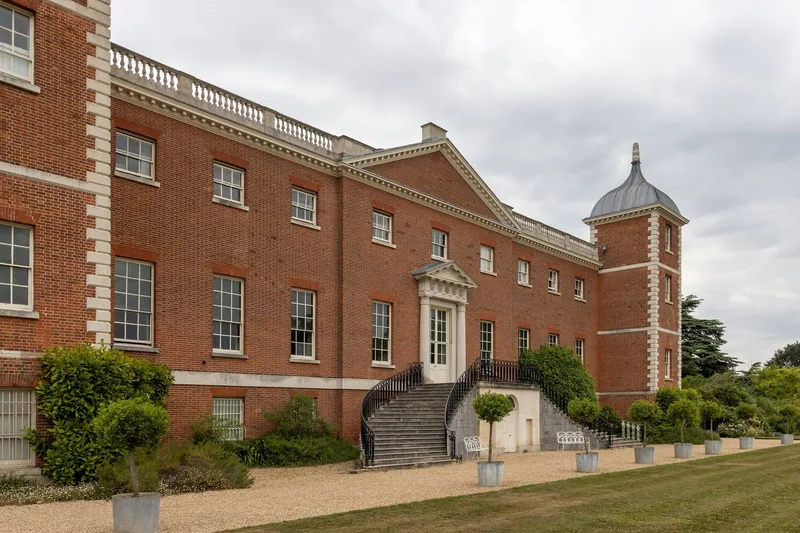
Photograph by Mike Peel (www.mikepeel.net) · CC BY-SA 4.0 · Wikimedia Commons · resized
What a visit actually costs
| Ticket | Standard | With Gift Aid |
|---|---|---|
| Adult, house and gardens | £18.00 | £19.80 |
| Child 5-17, house and gardens | £9.00 | £9.90 |
| Family, 2 adults and up to 3 children | £45.00 | £49.50 |
| One adult and up to 3 children | £27.00 | £29.70 |
| Adult, gardens only | £10.00 | £11.00 |
| Child, gardens only | £5.00 | £5.50 |
| Family, gardens only | £25.00 | £27.50 |
| Car park | £7.00 | - |
Two adults and two children therefore pay £45 for the house and gardens on the family ticket, or £52 with the car park, and £25 for the gardens alone. Gift Aid pricing is a voluntary donation of about ten per cent; you are offered the choice and there is no obligation. Under-fives are free, and National Trust members pay nothing at all, including for parking, which is the calculation to do if you are visiting two or three Trust properties on one trip.
The gardens-only ticket is the one worth knowing about. It is sold on days when the house is not open, and it is a little over half the price. If your reason for coming is the park, the lakes and a long walk, that is the ticket you want.
The opening hours are shorter than you expect
This is the practical trap at Osterley. The park opens at 9am and the gardens at 10am, but the house itself was opening at 11:00 and closing at 15:30 in autumn 2026, and it was closed on Tuesdays. From early November those house hours shorten again, to 11:00-15:00.
The Trust also says plainly that rooms are open subject to the season and to volunteer availability on the day, so a room you came for may be roped off. That is normal at a house staffed by volunteers and it is not worth a complaint, but it does mean you should not travel an hour for one specific interior.
Arrive at eleven, not at two. With a four-and-a-half-hour house day and a fifteen-minute walk from the Tube at each end, an afternoon start leaves you rushing the rooms. Come for the house opening, eat at midday, and give the park the afternoon, when it is open much later than the house.
Adam's interiors, and the room worth the journey
The shell of Osterley is Elizabethan, but what you see is Adam: he reworked the house from the 1760s, and he designed not only the rooms but the furniture, the mirrors, the carpets and the door handles in them. That completeness is why Osterley matters to anyone interested in eighteenth-century design, and why it feels different from a house furnished by successive generations.
The set piece is the Etruscan Dressing Room, decorated in the terracotta-and-black manner Adam took from Greek vases that were then thought to be Etruscan. Very few of his Etruscan schemes survive anywhere, and this is the best of them. Elsewhere the sequence of state rooms builds deliberately towards the bedchamber, because the point of the house was to impress people who were deciding whether to bank with the Childs.
If Adam is what brings you, the obvious companion is Syon House, about two miles away towards the river and also remodelled by him, and Kenwood in north London, where the Great Library is free to see.
The gardens: a six-year rescue
The formal gardens were an overgrown wilderness and have been brought back over a six-year project to something closer to their eighteenth-century state: herbaceous borders, roses and ornamental vegetable beds laid out in patterns.
The building in them is Adam's garden house, a small semi-circular summer house planted with lemon trees and scented shrubs. It is the sort of thing that gets missed because it looks like a garden feature rather than an exhibit, and it is by the same architect as the rooms in the house.
The park, the lakes and the walks
Beyond the gardens the park is free-form eighteenth-century landscape with a chain of lakes through it. The National Trust's own suggested route takes in Middle Lake for wildlife, deckchairs on the temple lawn, a woodland walk that passes a disused boathouse, and an old hay meadow full of wildflowers and butterflies in summer.
The park is also working farmland, which is unusual this far inside London. The Charolais cattle beside the drive are part of that, and they are the reason dogs need to be under control here even though dog walking is allowed.
Cycle hire operates on the estate on Thursdays, Fridays, Saturdays and Sundays, from 10:30 to 15:30, which makes the park a reasonable family afternoon in its own right; our guide to cycling in London covers getting a bike out here instead.
Eating, and the bookshop
The Stables Café is in the courtyard by the house. It held a food hygiene rating of 5 at its inspection in June 2026, it does lunch and cake, and it is the only substantial food on the estate, so take something with you if you are arriving with hungry children outside its hours. Taking lunch out to the lake is expressly encouraged.
There is also a second-hand bookshop on site, open daily from 11:00 to 16:30 in the autumn and closing earlier in winter, and a shop by the courtyard. Nearby food is thin: this is a residential corner of Isleworth rather than a high street, and Brentford and Isleworth proper is a bus ride away.
The park costs nothing to walk in if you arrive on foot. The £7 charge is for the car park, not for entering the estate, so a walk in from Osterley station and a circuit of the lakes is free. The gardens and the house are the ticketed parts.
Access, children and dogs
The National Trust lists Osterley as family-friendly and dog-friendly, with an induction loop, large-print, braille or audio guides, and disabled access. A Georgian house has stairs and thresholds, so ring the property on 020 8232 5050 before travelling if you need specifics; our guide to accessible London explains the general pattern at historic houses.
For children, the park and the cycle hire carry the visit rather than the interiors. Deckchairs, a lake, a meadow and cattle are a better proposition at six years old than a dressing room, and the gardens-only ticket keeps the cost sensible; see also our guide to London with kids.
What to put around it
Osterley is a half-day, and the western edge of London has several things that pair with it on the same lines. Kew Gardens and Chiswick House are both east along the District and Overground corridor, and the Museum of Water and Steam in Brentford is the closest indoor alternative if it rains. Further upriver, Ham House and Marble Hill are the Thames-side equivalents.
Frequently asked questions
How much does Osterley Park cost?
House and gardens: £18 for an adult, £9 for a child aged 5 to 17, and £45 for a family of two adults and up to three children. Gardens only: £10, £5 and £25. Car parking is £7. Under-fives and National Trust members go free. Gift Aid prices are about ten per cent higher and are voluntary.
Which station is nearest to Osterley Park?
Osterley, on the Heathrow branch of the Piccadilly line, in fare Zone 4. It is about 900 metres from the house in a straight line and roughly fifteen minutes on foot, walking north across the Great West Road to Jersey Road and then up the estate drive.
Is Osterley House open every day?
No. In autumn 2026 the house opened 11:00 to 15:30 and was closed on Tuesdays, with shorter hours from early November. The park opens daily from 9am and the gardens from 10am, so the grounds are available on days when the house is not. Rooms can also be closed at short notice if volunteers are not available.
Can you walk in the park at Osterley without paying?
Yes. The £7 charge is for the car park, and the ticket price is for the gardens and the house. Arriving on foot from Osterley station and walking the park and the lakes costs nothing.
Is Osterley worth visiting with children?
Yes, but for the outside rather than the inside. The park has lakes, a meadow, a woodland walk, deckchairs and grazing cattle, and cycle hire runs Thursday to Sunday from 10:30 to 15:30. The gardens-only family ticket at £25 is the sensible buy if nobody in the group wants to look at an Adam ceiling.
Sources
- National Trust - Osterley Park and House (prices, opening hours and description; read via an Internet Archive copy dated 31 August 2026 because the live site blocks automated requests) (checked September 2026)
- Transport for London - Osterley Underground Station station data (open data) (checked September 2026)
- Food Standards Agency - food hygiene rating, Stables Cafe, Osterley Park TW7 4RB (checked September 2026)