
Taking photographs in London's streets is not licensed or restricted, and nobody will ask you for a permit. The constraints come from landowners rather than from photography law: a tripod on the Underground is prohibited, several famous squares are private property, and a drone cannot legally be flown in central London in any useful way.
For almost every visitor that adds up to a simple position. Point a phone or a camera at anything you can see from a public street and carry on. The rules that follow matter when you bring equipment, when you step off the pavement onto a privately owned estate, or when you are being paid for the pictures.
The drone section at the end is the one people most need, because the answer is not what they hope and the penalties are real. If you are still deciding what camera gear to bring at all, our page on what to pack for London takes the view that a tripod is usually dead weight.
What is and is not allowed
- Hand-held photography in the street
- No permit needed
- Tripods on TfL property
- Prohibited, along with flash photography
- Commercial photography on TfL property
- Needs a permit from the TfL Film Office
- Business photography in a Royal Park
- Needs written permission
- Privately owned squares and estates
- The owner sets the rules. Security may stop a tripod
- Inside museums and churches
- Varies by room. Watch for the signs
- Drones in central London
- Effectively impossible to fly lawfully
The street is the easy part
Britain has no permit system for ordinary photography in public places, which is why London is full of cameras. You can photograph buildings, bridges, buses and crowds from the pavement without asking anyone, and that includes photographing the police, who are used to it.
Two practical courtesies rather than rules. Do not block a narrow pavement to compose a shot, because London pavements are busy and people will walk into you. And be careful with close-up photographs of individuals who have not agreed to it, particularly children, which is a matter of manners and of avoiding an argument rather than of law.
The place where photography and personal safety meet is worth noting. Standing still at the kerb with a camera or a phone held out is exactly the situation our page on how pickpockets work describes, so step back against a wall and keep the strap round your wrist.
Squares and streets that are privately owned
Several of the most photogenic parts of central London look like public streets and are not. They are privately owned estates with their own security staff and their own rules, typically permitting casual hand-held photography and prohibiting tripods, lighting, drones and anything that looks like a commercial shoot without prior agreement.
The main ones a visitor will walk into are the Canary Wharf estate, the regenerated area around Granary Square in King's Cross, the riverside walk beside City Hall's former home at More London, Paternoster Square next to St Paul's Cathedral, and the Westfield shopping centres.
Nobody will stop you taking a photograph on your phone in any of them. Set up a tripod and a light, and a member of security will politely ask what you are doing. If the shoot matters, contact the estate's management in advance, because they all have a process and it is generally free for small projects.
Tripods, and the rule most visitors break without knowing
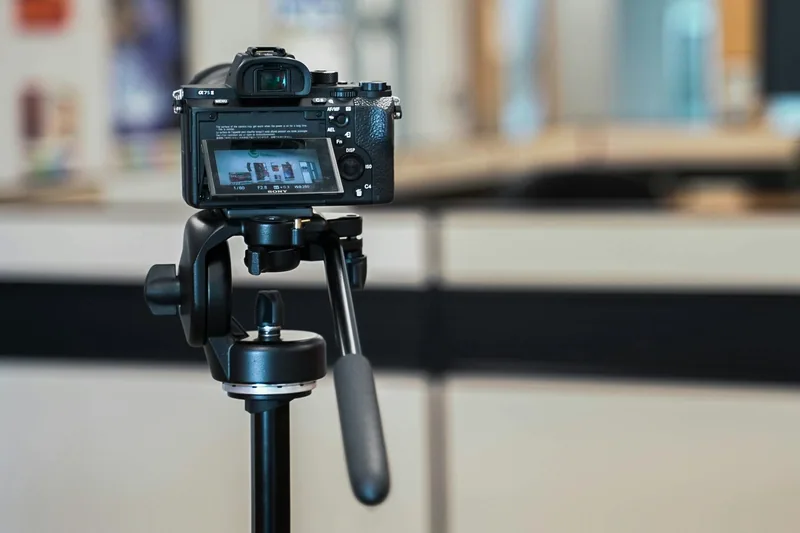
Transport for London's Conditions of Carriage are specific. On buses, trams and trains, in bus and rail stations and on tram platforms, you must not take flash photographs or use a tripod or other camera support equipment, and you must not carry out filming or photography for commercial purposes without TfL's express permission.
That covers every Tube station, every Overground and Elizabeth line station, the DLR, the trams, the piers and Victoria Coach Station. It is the reason a photographer setting up on a platform is moved on within a minute or two, and it applies to a small travel tripod as much as to a professional one.
Hand-held photography on the network is not prohibited, so the standard shot of a train arriving with the platform empty is fine. Keep out of the way, do not lean over the yellow line, and expect staff to intervene if you obstruct anyone, which our page on Tube etiquette covers.
Commercial work on the network goes through the TfL Film Office, which requires an application, a script or brief, a site-specific risk assessment and insurance of at least £10 million, plus a permit and an on-site representative.
A tripod on a bridge is a different problem from a tripod on a platform. Westminster, Waterloo and Tower Bridges are public highway, so nobody licenses your tripod, but the footways are narrow and busy and the wind is strong. If you want a long exposure of the river, the wide riverside terraces on the South Bank are easier than the bridges themselves.
The Royal Parks rule about business photography
The Royal Parks and Other Open Spaces Regulations 1997 govern Hyde Park, Kensington Gardens, St James's Park, Green Park, Regent's Park, Greenwich Park, Richmond Park, Bushy Park and the other Crown open spaces in London.
Regulation 4 lists things nobody may do in a park without written permission, and item 18 is taking "photographs of still or moving subjects for the purpose of or in connection with a business, trade, profession or employment". Holiday snapshots are unaffected. A paid portrait session, a wedding shoot or a commercial video is not, and the parks operate a permit system for exactly that.
The same regulations prohibit using a kite or a model aircraft, or any mechanically propelled or operated model, where a notice or a police officer says not to, which is the hook the parks use against drones.
Practically: photograph the deer in Richmond Park and the pelicans in St James's Park as much as you like, and apply in advance if money is changing hands. Our guide to Greenwich Park covers the view that most people are there to photograph.
Inside museums, galleries, churches and attractions
There is no single rule, so read the signs at the door and at the entrance to each room.
The broad pattern in London is that permanent collections in the free national museums allow hand-held photography without flash, temporary and ticketed exhibitions often do not because of loan conditions, and tripods and selfie sticks are generally banned everywhere indoors.
Specific bans do exist and are enforced. At the Tower of London, Historic Royal Palaces states plainly that photography is not allowed in the Jewel House, so the Crown Jewels cannot be photographed at all. Several cathedrals and churches restrict photography during services, and some charge for a photography permit.
Where a sign says no, the reason is usually a loan agreement, a copyright condition or crowd flow rather than secrecy, and staff have no discretion to make an exception.
Drones: why the answer in London is no
This is the part that disappoints people, so here is the reasoning rather than just the conclusion.
Flying an unmanned aircraft in the UK sits under a retained version of European Regulation 2019/947, enforced by the Civil Aviation Authority. Most leisure flying falls in the "open" category, which is divided into three subcategories now called Over People (A1), Near People (A2) and Far from People (A3). You also need to register: an operator ID for the person responsible for the aircraft and a flyer ID for the person at the controls, obtained through the CAA's drone registration service, which charges an annual fee for the operator ID. Check the CAA for the current amount.
Four separate limits then apply, and central London fails all of them:
- Height. The aircraft must stay within 120 metres of the closest point of the earth's surface.
- Distance from people. In A3, the flight must be at least 150 metres horizontally from residential, commercial, industrial or recreational areas. There is no point in central London 150 metres from all of those.
- Uninvolved people. In A2, depending on the aircraft, you must keep at least 30 metres from uninvolved people, reducible to 5 metres only with an active low-speed mode, or 50 metres. You may never fly over an assembly of people.
- Flight restriction zones. Around a protected aerodrome you need permission from its air traffic control before flying. The zone is the aerodrome traffic zone plus a runway protection zone for each runway threshold, a rectangle 5 kilometres long and 1 kilometre wide, or 1.5 kilometres wide at Heathrow, extending from the ground to 2,000 feet, plus a further band one kilometre out from the aerodrome boundary.
London contains several protected aerodromes, including Heathrow, London City, Northolt and Biggin Hill, and the London Heliport at Battersea, which sits on the Thames in the middle of the city.
On top of aviation law, you need the landowner's permission to take off and land. The Royal Parks prohibit model aircraft by notice, TfL land is private property, and the privately owned estates listed earlier all say no.
The practical conclusion: do not bring a drone to London expecting to fly it over the Thames. Any footage you see of central London from the air was shot under a specific operational authorisation, usually by a professional operator with permissions from the CAA, the airport and the landowner.
If you do bring a drone, check the airspace before every flight, not once. Restricted areas are created temporarily around major events, state occasions and incidents, and a zone that did not exist yesterday can exist today. The CAA and the national air traffic service publish the current picture.
Where a drone can be flown near London
Outside the built-up area the A3 rules become achievable: open countryside 150 metres from buildings, well away from any aerodrome, with the aircraft in sight at all times and below 120 metres.
Model flying clubs offer the other route, because they operate at established sites with arrangements in place. Several sit within an hour of London.
Either way the registration requirement still applies, as does the ban on flying over assemblies of people. If you are visiting for a few days, the realistic answer is to leave the drone at home and use one of the viewpoints instead.
The views you can photograph legally and easily
London compensates for the drone ban with a remarkable number of high places, several of them free.
The Sky Garden is free with a booked ticket and allows photography throughout. Our list of the best free viewpoints covers the others, and our comparison of London's viewing platforms weighs up the paid ones, including The Shard.
For the river itself, the bridges walking route gives a sequence of angles no drone shot would improve on, and the top deck of an ordinary red bus is the cheapest moving camera platform in the city.
Frequently asked questions
Do I need permission to take photographs in London streets?
No. There is no permit system for ordinary photography in public places in Britain, which is why cameras are everywhere. Restrictions come from landowners instead: privately owned estates, Transport for London property and the Royal Parks each have their own rules, mostly about tripods, lighting and commercial work rather than snapshots.
Can I use a tripod on the London Underground?
No. Transport for London's Conditions of Carriage prohibit flash photography and the use of a tripod or other camera support equipment on buses, trams and trains, in bus and rail stations and on tram platforms. Hand-held photography is not prohibited. Commercial filming or photography anywhere on the network needs a permit from the TfL Film Office.
Can you fly a drone in London?
Not in any practical sense in the centre. The open category rules require at least 150 metres from residential, commercial, industrial or recreational areas in the Far from People subcategory, a maximum height of 120 metres, and no flying over assemblies of people. Flight restriction zones surround Heathrow, London City, Northolt, Biggin Hill and the London Heliport at Battersea, and landowners including the Royal Parks and TfL refuse take-off and landing.
Do I have to register a drone in the UK?
Yes. The Civil Aviation Authority operates a registration service issuing an operator ID for the person responsible for the aircraft and a flyer ID for whoever is at the controls, with an annual fee for the operator ID. Registration is required regardless of where you are visiting from, and does not by itself make a flight lawful.
Can I photograph the Crown Jewels?
No. Historic Royal Palaces states that photography is not allowed in the Jewel House at the Tower of London. Elsewhere in London, permanent collections in the free national museums generally allow photography without flash, while temporary exhibitions often do not, so look for the sign at the entrance to each room.
Sources
- Transport for London - Conditions of Carriage, clause 2.4 (checked September 2026)
- Transport for London - Filming and photography on TfL (checked September 2026)
- The Royal Parks and Other Open Spaces Regulations 1997, regulations 3 and 4 (checked September 2026)
- Retained Regulation (EU) 2019/947, Annex Part A (open category) (checked September 2026)
- Air Navigation Order 2016, articles 94A and 94B (flight restriction zones) (checked September 2026)
- Civil Aviation Authority - The Drone and Model Aircraft Code (checked September 2026)
- Historic Royal Palaces - The Crown Jewels (checked September 2026)