
A strike in Britain is announced in advance, not sprung on you: a union must give the employer at least ten days' written notice, so operators normally publish what they expect to run about a week ahead. Check two pages the evening before you travel, and most of a day can be saved rather than lost.
If the action is on the London Underground specifically, our detailed guide to getting around during a Tube strike sets out what usually keeps running and how to cross the centre without it. This page is broader: it covers rail strikes, bus strikes, airport disruption and closures at museums, and it deals with the money, which is where visitors lose most.
On 20 September 2026 the only entry on Transport for London's strike page concerned Arriva London North bus routes, where planned action had been called off and services were running to the usual timetable. Nothing was listed for the Underground. That is the ordinary state of affairs: strikes here are episodic rather than constant.
Where to check, in order
- TfL strikes page
- tfl.gov.uk/campaign/strikes, for the Tube, buses, DLR, trams and Overground
- TfL live status
- The status page at tfl.gov.uk, or TfL Go on your phone, on the morning itself
- National Rail
- nationalrail.co.uk disruptions, for trains out of London and to the airports
- The operator's own site
- Eurostar, Heathrow Express and the airlines publish their own plans
- Attractions
- The museum's or venue's own website, on the day
- Minimum warning
- Ten days' notice to the employer, so plans are usually public about a week ahead
Why you will almost always know in advance
British industrial action is heavily regulated in ways that work in a traveller's favour. Section 234A of the Trade Union and Labour Relations (Consolidation) Act 1992 requires a union to give the employer written notice of industrial action, and since 18 February 2026, following the Employment Rights Act 2025, that notice must reach the employer no later than the tenth day before the first day of the action.
Because the employer knows, the public knows. Transport for London puts up a page naming the services involved, the dates and its best estimate of what will run. National Rail and the train companies publish amended timetables of their own. Airlines write to passengers directly.
The other consequence of the notice rule is that strikes get called off. A dispute settled at the last minute means the action is suspended, and the page that said "strike" yesterday says "services running normally" today. Never rearrange a whole trip on the strength of a headline: check the operator's own page the evening before and again on the morning.
Check once more at around nine in the evening. Settlements are reached late in the day far more often than the newspapers report, and a suspended strike means an ordinary timetable. Two minutes on TfL's page can give you back a day you had already written off.
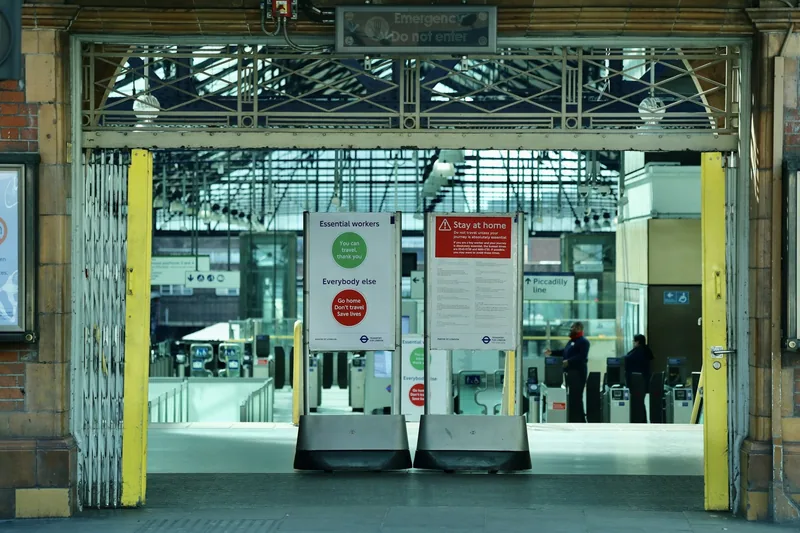
Six different things can stop, and they stop separately
"A strike in London" is not one event. Each of these is run by a different employer with a different workforce, and action by one does not imply action by another.
| What strikes | What it affects | Where to check |
|---|---|---|
| London Underground staff | Tube only. The Elizabeth line, Overground, DLR and bus network usually keep going | TfL strikes page |
| A single bus operator | Named routes in part of London. Most buses unaffected | TfL strikes page |
| DLR staff | The DLR alone, which can strike on days the Tube does not | TfL strikes page |
| A train company | Trains out of London, including airport routes | National Rail and the operator |
| Airport or airline staff | Check-in, baggage or security at particular terminals | The airline and the airport |
| Museum or gallery staff | One institution, sometimes only part of it | That venue's website |
The practical lesson is to check the specific thing you are relying on, rather than assuming that a headline about the Tube tells you anything about your train to Gatwick.
Rail strikes behave differently from Tube strikes
This is the distinction that catches people out, and it has real financial consequences.
On the Tube you pay as you go, so a day you do not travel costs you nothing and there is nothing to claim. On National Rail you usually hold a ticket for a specific train, and the rules attach to that ticket.
Two things follow. First, if your train is delayed or cancelled and you choose not to travel, National Rail's position is that the unused ticket can be refunded without a fee by the retailer you bought it from. That applies to Advance tickets too, which are otherwise non-refundable. Go back to whoever sold it to you, not to the station.
Second, and less welcome: Delay Repay compensation is calculated against the timetable actually in force, and National Rail states that this includes an amended timetable published in advance. A strike timetable published a week ahead becomes the benchmark, so a train that runs three hours later than the normal timetable but on time against the strike timetable generates no compensation at all. Claiming is worth doing when your train is late against the published strike timetable, and pointless when it is not.
Train companies normally also relax ticket validity around a strike, allowing travel a day either side or on a different route, but the terms are published for each event rather than being a standing rule. Read what the operator says for those specific dates. Our page on buying UK train tickets explains the ticket types this applies to.
Getting to the airport when the trains stop
Airport journeys are the ones worth protecting, because a missed flight cannot be rearranged from a platform.
Every London airport has more than one way in, and the routes belong to different organisations. Three separate operations reach Heathrow, the Piccadilly line, the Elizabeth line and Heathrow Express, alongside coaches and the N9 night bus. Gatwick has three train services sharing the same tracks, plus coaches. Stansted has its express train and National Express. Our comparison of the routes into town from Heathrow and our page on choosing between Gatwick Express, Thameslink and Southern set out the alternatives.
Coaches are the fallback that industrial action on the railways does not usually touch, and Victoria Coach Station keeps running. They are slower and subject to traffic, so add an hour to whatever the timetable says.
Airport staff strikes are a different problem again. They do not stop your journey to the airport; they lengthen the queues once you are there. If check-in or security staff are taking action, the airline's advice on how early to arrive is the one to follow, and it will be longer than usual.
Museums, attractions and events
Staff at national museums have taken industrial action from time to time, and when they do the effect is usually a partial closure: some galleries shut, the shop and café closed, or the whole building shut for a day.
Nothing centralised lists this, so check the individual venue's website or social media on the morning. Free museums are the easiest to be flexible about, since you have lost nothing but the journey; our list of free museums in London gives plenty of alternatives within walking distance of each other.
Where you hold a timed, paid ticket, contact the attraction rather than the reseller you bought from, and do it before the slot rather than after. Most will move a booking for a closure they caused.
Theatres and concert halls are very rarely affected, because they are separate private businesses. The bigger risk on a strike day is getting to the theatre, not the performance itself; our guide to West End theatre notes how tight the timings are.
Reworking the day: pick one postcode and stay in it
The single best adjustment is to stop crossing the city. On a disrupted day, a plan that involves three Tube journeys becomes three problems; a plan that involves one area and a lot of walking becomes a good day.
Clusters that work on foot include South Kensington's three museums; Westminster, Whitehall and St James's Park; the City from St Paul's to the Tower; and the South Bank from Westminster Bridge to Tower Bridge. Each gives four or five hours without touching a train.
Understanding which areas sit next to each other is easier with the postcode than with the Tube map, as our page on how London postcodes work explains. Walking is also faster than most visitors assume, and our guide to walking in London lists the journeys where it beats the Tube even on a normal day.
Buses carry on through most disputes and are the cheapest fallback going. A single costs £1.75 until 1 November 2026, when it becomes £1.85, and buses and trams have their own daily ceiling of £5.25 regardless of how many you take. Changing bus within the hour costs nothing extra. Roads will be far busier than usual, because everyone else has had the same idea. Our guide to London buses covers the useful routes.
The river is the calmest option and the most weather-dependent. It is not included in the daily cap, so each journey is paid in full; our page on the river bus has the zonal fares.
What to do the night before
Five things, none of which take long.
- Move any booking that needs a cross-city journey during the morning rush. A ten o'clock slot right across the city is the first casualty.
- Screenshot the route and save an offline map, because the whole city will be online at once and station networks will crawl. Which applications keep working without a signal is covered on our page about the apps that help in London.
- Decide the walking version of the day, so you are not planning it on a platform.
- Charge the power bank. If your phone is your ticket and your map, a flat battery on a disrupted day is a genuine problem.
- Wear the comfortable shoes, as our page on what to pack insists.
If it is the day you leave
Treat departure day as the one that has to work and give it a large margin.
For a flight, leave for the airport a clear hour earlier than you otherwise would, and choose the route that is least dependent on the service that is striking. For Eurostar, remember that passport checks for both countries happen at St Pancras before boarding and that Standard and Plus passengers are asked to arrive 75 minutes ahead, so the margin needs to be bigger again.
For a very early departure with no Underground service, remember that night buses are run by different operators entirely and keep going, with route N9 linking the centre to Heathrow. Taxis and the other options are set out on our page about getting to an airport late at night or early in the morning.
Finally, check your travel insurance before you rely on it. Cover for missed departures caused by industrial action varies a great deal, and some policies exclude strikes announced before you booked. Our page on travel insurance and healthcare cover explains what to look for; we do not recommend insurers.
Frequently asked questions
How much notice is given before a strike in the UK?
A union must give the employer written notice no later than the tenth day before the action begins, a period shortened from fourteen days by the Employment Rights Act 2025 with effect from 18 February 2026. Because the employer knows, operators publish their plans, usually about a week in advance, and often update them daily.
Where do I check whether there is a strike in London?
Three places. TfL's strikes page covers the Underground, buses, the DLR, trams and the Overground. National Rail's disruptions page covers trains leaving London and running to the airports. Eurostar, Heathrow Express and each airline publish their own plans. Check the evening before and again in the morning, since action is often called off at short notice.
Can I get compensation if a strike delays my train?
Often not. Delay Repay is measured against the timetable in force, and National Rail says that includes an amended timetable published in advance, so a train running to a strike timetable is not counted as late. What you can do is claim a fee-free refund on an unused ticket, including an Advance ticket, from the retailer you bought it from if you choose not to travel.
Do museums and attractions close during strikes?
Occasionally. Staff at national museums have taken action in the past, usually causing a partial closure of some galleries rather than the whole building. There is no central list, so check the individual venue's website on the morning. Theatres and concert halls are very rarely affected.
Can I still get to Heathrow if the Tube is on strike?
Yes. The Piccadilly line, the Elizabeth line and Heathrow Express are run separately, so action by Underground staff does not stop the other two, and coaches and the N9 night bus are unaffected as well. Leave an extra hour, because everyone else will be using the same alternatives.
Sources
- Transport for London - Strikes (checked September 2026)
- Trade Union and Labour Relations (Consolidation) Act 1992, section 234A (checked September 2026)
- National Rail - Compensation and refunds (checked September 2026)
- National Rail - Disruptions (checked September 2026)
- Transport for London - Bus and tram fares (checked September 2026)
- Eurostar - Check-in and arrival times (checked September 2026)