
At a London walk-in restaurant you give your name and mobile number at the door, walk away, and get a text when a table is free. At peak that wait is usually twenty to forty minutes; at 5.30pm or after 9pm it is often nothing at all. Nobody is keeping a secret list, and nothing will get you past it.
A sizeable and generally very good tier of London restaurants refuses reservations on purpose. Some are tiny rooms where a no-show would cost a quarter of the evening's covers. Some turn tables so fast that a booking system would slow them down. Some simply decided that a queue is a fairer way to hand out a small number of seats than a booking page that sells out at midnight three weeks ahead.
The frustration for a visitor is that the system is unwritten. This page sets out how it actually works, which London places have held the line for years, and the hours that make the difference between a short wait and a wasted evening.
The walk-in evening in brief
- Best arrival
- The minute the kitchen opens, or after 9pm
- Worst arrival
- 7.30pm to 8.30pm, Thursday to Saturday
- Typical peak wait
- 20 to 40 minutes at a popular room
- Group limit
- Frequently four; six at the outside. Larger parties are the problem the system cannot solve
- How you are called
- Text message, an app notification, or a shout at the door
- Roaming range
- Some virtual queues only let you join within a set distance of the door
The four systems, and how to tell which one you are in
"No bookings" covers four quite different arrangements. Working out which one a place uses, before you travel across London, is most of the skill.
- A physical queue. You stand in line and move up. Common at counters with no waiting area and at lunchtime places. You cannot leave and come back.
- Name on a paper list. A host takes your name and number, gives you a rough time, and rings or texts you. You are free to go to a pub.
- A virtual queue in an app. You scan a code at the door, or join remotely from nearby, and watch your position on a phone. Padella runs this at its Borough Market room through the Dojo app, and states plainly that it does not accept reservations there.
- A waiting list attached to a booking system. The restaurant does take bookings, is full, and lets you register for a cancellation. This is not a walk-in restaurant, and it behaves completely differently.
The distinction matters because only the middle two let you go for a drink. If a room uses a physical queue, the forty minutes are forty minutes of standing, and the answer is to go earlier rather than to wait better.
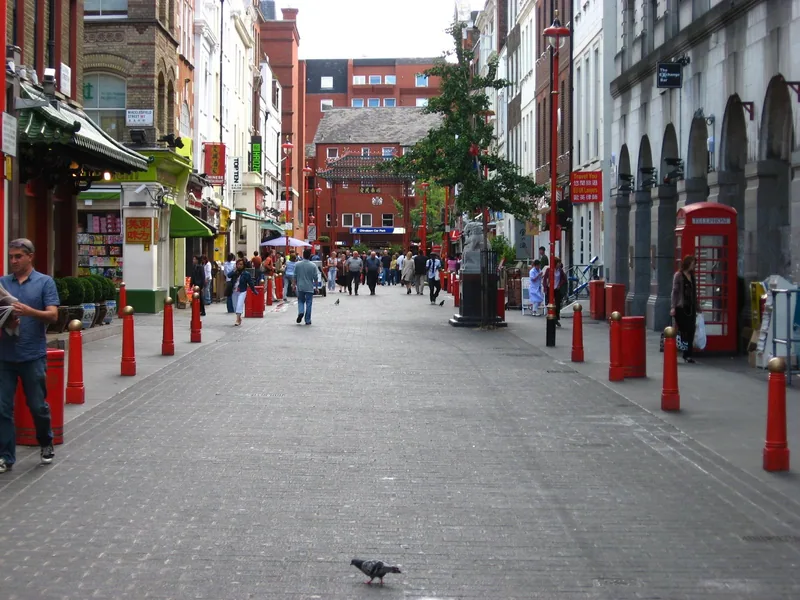
Photo: Gambitek · CC BY-SA 4.0 · Wikimedia Commons · resized
London places that have kept the rule for years
New openings run a queue for a season and then quietly install a booking page. The places below have turned reservations down for long enough that the policy is part of what they are. All were checked on their own websites in September 2026; policies do change, so look again before you set out.
| Where | Area | How it works |
|---|---|---|
| Barrafina, Dean Street | Soho | The original site, and the only Barrafina that takes no reservations. Counter stools; the covered, heated terrace is first come, first served. The group's other London branches all take bookings |
| Padella, Borough Market | Borough | No reservations at all. Virtual queue through an app, joined at the door or remotely. Maximum six people |
| Dishoom | Seven branches across London | Describes itself as mostly a walk-in café: bookable before 6pm, then walk-in only in the evening except for groups of six or more, with most tables held back for walk-ins |
| Roti King | Euston, Spitalfields, Waterloo, Battersea | "No reservations", first come first served, at every branch. The Euston basement is the famous queue; the other three are usually quicker |
| Homeslice, Neal's Yard | Covent Garden | Walk-in basis, seven days a week. The City branch of the same company does take bookings |
| Gordon's Wine Bar | Embankment | Trading since 1890 and still refusing reservations for the cellar: "the best way to grab a table is to turn up early" |
| Regency Café | Westminster | A 1940s workers' café, open Monday to Saturday from 7am until half past three, no reservations, order at the counter |
Sweetings, the Victorian fish restaurant in the City that serves weekday lunch only and seats most people at a counter, belongs on the same list; it is covered on our page about oysters and seafood in London.
One Barrafina refuses reservations and four of them accept. The Dean Street room is walk-in only; the group's other London branches all take bookings, which is exactly the sort of split that catches people out. Before you build an evening around a queue, check the page for the individual branch rather than the restaurant's home page, because chains with several London sites very often run different policies at each one.
The hybrid model, which is now the most common of all
The purest form of the no-bookings restaurant is becoming rarer. What has replaced it is a split: tables bookable in advance, counter stools and terrace seats kept for people who walk in.
Padella's Shoreditch and Soho rooms are a clear example. Both take reservations up to four weeks ahead, both keep the kitchen counter, the bar and the outdoor tables for walk-ins, and both run the same virtual queue when they fill up — which you can join from up to two kilometres away, so you can start queueing from a bar rather than from the pavement.
This is good news for solo diners and pairs and bad news for groups. If you are two people willing to sit at a counter, the hybrid model means you can usually eat at a restaurant that has been fully booked for weeks. Our page on eating alone in London goes further into counter dining.
The hours that decide everything
A London kitchen's evening service is a bell curve with a very sharp top. Almost all of the waiting happens between about 7.30pm and 8.30pm from Thursday to Saturday.
| When you arrive | What happens |
|---|---|
| Opening time, usually 5.30pm or 6pm | Straight in. The room is empty and the kitchen is fresh |
| 6.30pm | Short wait, often ten minutes |
| 7.30pm to 8.30pm | The peak. Thirty to sixty minutes at a busy room |
| After 9pm | Walk in again, though the menu may have gaps |
| Monday and Tuesday, any time | Rarely a wait anywhere. Some kitchens close instead |
Lunch behaves differently. The City empties at weekends and fills at 12.30pm on weekdays; Soho and Covent Garden do the reverse. A weekday lunch in Soho at 11.45am is one of the easiest meals in London to walk into.
Two other timing facts are worth knowing. Kitchens at walk-in places often stop seating well before they close, so a 10.30pm closing time may mean a 9.45pm last table. And Sunday evening is quietly the best night of the week for a good room, because a lot of Londoners have decided to stay in.
Group size is the wall you will hit
This is the part visitors underestimate. Walk-in restaurants are built around small tables, and pushing them together destroys the turnover that makes the system work. Padella's Borough room will not seat more than six at all and sends larger parties to its other branches. Dishoom flips the rule and takes evening bookings only for six or more.
If you are four or fewer, the walk-in tier of London is open to you. If you are five to eight, expect to be split or refused, and plan around a restaurant that books. If you are more than eight, stop reading this page: you need a booking, and probably a set menu. A gastropub is usually the easiest answer for a larger group at short notice, because the dining tables are bookable while the bar stays open to everyone else.
What to do with the wait
The useful trick is to treat the wait as the first part of the evening rather than as dead time. Put your name down, ask honestly how long it will be, then go somewhere within five minutes' walk and have one drink.
Three practical points. Ask whether they will ring or text, and whether the phone number needs a UK format — a foreign mobile number sometimes will not take the automated message, in which case ask to be called instead. Ask how long you have to get back: fifteen minutes is common and ten is not unknown. And if the restaurant is in a market building or a food hall, find out when the building itself shuts, not only the kitchen.
The queue itself is where the best ordering advice comes from. People coming out have just eaten what you are about to order, and the door staff at a walk-in place have nothing to do while they wait for a table to clear. Ask them what came back to the kitchen untouched tonight. It is a far more reliable answer than the photographs, and it costs nothing.
The ones that changed their minds
Half the advice online about London's no-bookings restaurants is out of date, and following it wastes an evening in the worst way: you arrive expecting to queue, and are told the place has been fully booked since Tuesday.
The traffic runs in both directions. Flat Iron built its reputation on turning reservations away and now takes bookings through its own site. Tayyabs, for decades the archetypal East End queue, now has a booking page. Meanwhile some restaurants have gone the other way and dropped reservations after too many no-shows.
There is no shortcut here beyond opening the restaurant's own page on the day. Two warnings, though. Do not rely on a third-party listing, which is frequently a year behind. And be careful with web addresses that look plausible: several domains that once belonged to well-known London restaurants have lapsed and been bought by other people, and at least one long-established East End café's old address now serves gambling spam. If a page has no current opening hours on it, treat the business as unverified rather than as open.
Walking in with children, a wheelchair or an allergy
The queue is the part of the system that suits people least when standing around is difficult, and it is worth handling directly rather than hoping.
Telephone during the afternoon and explain. Most walk-in restaurants will not give you a table, because they genuinely have none to give, but they will tell you the quietest hour, whether there is anywhere to sit while you wait, and whether the seating is counter stools, which rules some rooms out entirely. Several will hold a spot informally for a wheelchair user because the accessible table is not one they can turn quickly anyway.
Allergies are easier at the start of service than in the middle of it, for the obvious reason: a kitchen doing forty covers an hour has less time to check a supplier list. Our guide to what a British kitchen has to tell you about allergens explains the legal position, which applies to a counter with six stools exactly as it does to a dining room.
Children are usually welcome at the early sitting and less so later. A 5.30pm table at a walk-in restaurant, when the room is empty and the staff are relaxed, is one of the better family meals in central London, and it is also the cheapest time to eat well — see our page about where London is cheap to eat.
Where else the queue is the normal way in
Whole categories of London eating run on walk-ins rather than bookings. Small ramen counters mostly do; the ramen section of our Japanese food guide has the detail. Neapolitan pizzerias generally do, because the oven sets the pace, as our guide to Italian cooking in the capital explains, while our survey of London pizza takes in the rest of the field. The busiest dim sum rooms take no bookings at weekend lunch. The traders in Borough Market and the food halls around Seven Dials never did.
At the opposite extreme, the dining rooms in London's grand hotels and most of its starred restaurants are booking-only, sometimes months ahead. Between the two sits almost everything else, which will usually find space for two people at eight o'clock on a Tuesday if you telephone rather than use the app. Late at night the rules relax again: see late-night food in London.
Frequently asked questions
How long will I actually wait at a London walk-in restaurant?
Twenty to forty minutes is normal at a popular room during the evening peak, and an hour is possible on a Friday or Saturday. Arriving when the kitchen opens, usually 5.30pm or 6pm, or after 9pm, generally removes the wait entirely. Mondays and Tuesdays rarely have one at any hour.
Can I join a London restaurant's queue before I get there?
Sometimes. Restaurants that use a virtual queue in an app may let you join from a set distance away, in Padella's case up to two kilometres, so you can wait in a bar instead of on the pavement. Places using a paper list at the door normally need you present to put your name down.
Which well-known London restaurants still refuse bookings?
Barrafina's Dean Street room, Padella at Borough Market, Roti King at all its branches, Homeslice in Neal's Yard, Gordon's Wine Bar and Regency Café are all long-standing examples, and Dishoom keeps most of its evening tables for walk-ins. Policies change, so check each restaurant's own page on the day.
Is it rude to ask how long the wait is?
Not at all, and the answer is usually honest, because a host who overpromises has to deal with the consequence. Ask for a realistic figure rather than a best case, ask whether you will be texted or telephoned, and ask how many minutes you have to return once the table is ready.
Do I still leave a tip at a restaurant with no bookings?
The same conventions apply as anywhere else in the city. Many bills arrive with a discretionary service charge already printed on them, and that charge is optional. At counters where you pay at the till, the card machine will usually offer one instead. Our guide to tipping in London sets out who ends up with the money.
Sources
- Barrafina - Dean Street, walk-in only policy (checked September 2026)
- Padella - Borough Market, virtual queue and group limit (checked September 2026)
- Padella - Shoreditch, reservations and walk-in counters (checked September 2026)
- Dishoom - Covent Garden reservations policy (checked September 2026)
- Roti King - locations, hours and no-reservations policy (checked September 2026)
- Homeslice - Neal's Yard, walk-in basis (checked September 2026)
- Gordon's Wine Bar - reservations are not taken (checked September 2026)
- Regency Café - opening hours and reservations (checked September 2026)