
London sells three quite different things under the word pizza: Neapolitan, which is soft, blistered and cooked in ninety seconds; Roman, which is either crackling thin or cut by the gram from a tray; and the British sourdough style that Franco Manca made normal. The cheapest good pizza in the city comes from a chain, and the most expensive is not necessarily better.
Our guide to Italian food in London covers the wider picture of delicatessens, pasta and the city's long Italian history. This page is only about pizza: how to tell the styles apart, what a proper Neapolitan base is supposed to feel like, and which of the chains are genuinely worth eating at, which our page on London's chain restaurants approaches from the other direction.
The short version: if the middle of your pizza is wet and folds under its own weight, that is not a mistake. It is how it is meant to arrive.
The styles, quickly
- Neapolitan
- Soft, wet centre, puffed and charred rim, 60 to 90 seconds in a very hot oven. Cut it up, or fold a slice into a parcel
- Roman tonda
- Rolled thin, crisp from edge to edge, no raised rim. Closer to a cracker
- Roman al taglio
- Long rectangular trays, priced by the gram, sliced with scissors and often reheated
- Pinsa
- Oval, made with a blend of flours and a long fermentation. Lighter and drier than Neapolitan
- Sourdough
- The London style: slow-risen naturally leavened dough, chewier than Neapolitan, blistered
- Cheapest sit-down
- Pizza Union lists prices starting at £3.95 (September 2026); check its current menu
- Booking
- Many of the best pizzerias take no reservations at all. Go early or expect to queue
Neapolitan: what it is and why the middle is wet
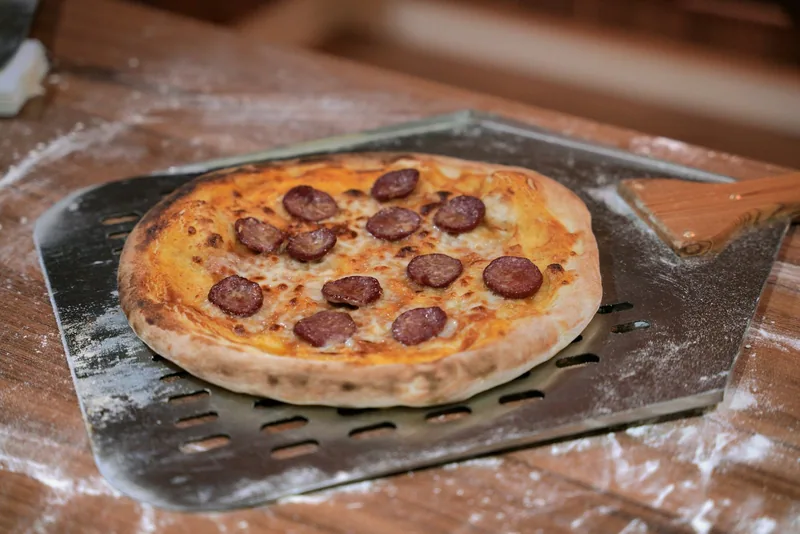
A Neapolitan pizza is a thin disc with a thick rim, stretched by hand rather than rolled, topped sparingly and baked for about a minute to ninety seconds in an oven running at something close to 450 degrees. The heat puffs the rim, blackens it in spots and leaves the centre soft, damp and unable to support itself.
The craft of the Neapolitan pizza maker is inscribed on UNESCO's list of intangible cultural heritage, which gives some sense of how seriously the rules are taken. The Associazione Verace Pizza Napoletana certifies pizzerias that follow them, and a handful of London restaurants display its plaque; it is a reliable signal, though plenty of excellent pizzerias never apply.
The two things visitors get wrong are both about the centre. First, it is not undercooked: a soupy middle is the intended result and a dry one means the oven was too cool. Second, you are not expected to lift a slice out flat. Use cutlery, or fold the slice lengthways twice, which is what people do in Naples.
Order the margherita first in a new pizzeria. With three ingredients and nowhere to hide, it tells you everything about the dough, the oven and the tomatoes. If the margherita is good, come back for the interesting ones. If it is not, no amount of nduja will fix it. It is also almost always the cheapest thing on the menu, which makes it a cheap test.
Roman pizza, which is two separate things
Rome sends London two traditions and they share nothing except the city of origin.
Pizza tonda romana is a round pizza rolled rather than stretched, baked longer at a lower temperature, and crisp from edge to edge with no soft rim at all. It shatters when you cut it. A few London pizzerias make it properly, and it is worth seeking out if you find Neapolitan pizza too floppy.
Pizza al taglio comes out of long metal trays laid along a counter. Point at the section you want, and it will be sliced, weighed and priced by the gram. The dough carries a very high proportion of water and rises for a day or more, which produces an open, airy crumb, and the tray is oiled so that the underside fries rather than bakes. Some toppings go on before the oven and some after.
Al taglio is the best cheap lunch in this whole category, because you buy exactly as much as you want. Our page on eating cheaply in London covers the alternatives.
Pinsa is the newer arrival: an oval base made from a blend of wheat, rice and soya flour with a very long cold fermentation. It is lighter and drier than Neapolitan dough and it has spread quickly through London in the last few years, sometimes on menus that do not explain what it is.
The sourdough places, and the London style
The dominant London pizza is none of the above. It is a naturally leavened base, risen slowly over a day or more, baked hot enough to blister but not quite as fiercely as in Naples, with a chewier and more assertive crust than the Italian original.
Franco Manca began in Brixton Market in 2008 selling exactly this, at a price that undercut everyone, and grew into a chain that now covers most of London. The dough is still slow-risen and the menu is still short, and the original site remains one of the better ones; our guide to Brixton covers the market it started in.
Zia Lucia, which began in north London, built its reputation on offering several doughs, including a long-fermented one, a charcoal-blackened one and a gluten-free base. Yard Sale Pizza grew out of east London delivery and now has shops across that half of the city. Santa Maria, in Ealing, has been making Neapolitan pizza in west London since 2010, a long way from the areas that usually get written about; see our guide to Ealing and west London.
The chains that are genuinely good
This is the part most guides skip because chains are assumed to be bad. In pizza specifically, several are not.
| Chain | What it does | Why it is worth knowing |
|---|---|---|
| Franco Manca | Sourdough bases, short menu, branches almost everywhere | Consistently good and priced well below independent pizzerias making similar pizza |
| Pizza Union | Very fast Roman-style bases, counter service, a handful of central sites | Prices start at £3.95, which makes it the cheapest sit-down pizza in central London |
| Pizza Pilgrims | Neapolitan, grew out of a market van, now across London | Reliable, family-friendly, and it does a folded pizza fritta |
| Homeslice | Very large pizzas sold whole or by the slice | Good for groups who cannot agree, and the by-the-slice option is useful alone |
| PizzaExpress | The oldest of them, since 1965, in high streets and stations | Predictable rather than exciting, and several branches have live jazz rooms underneath |
Those jazz rooms are a genuine London institution rather than a marketing idea, and our guide to jazz in London explains which branches run them and how the ticketing works.
A chain margherita often costs half what an independent charges for the same thing. The independent may well be better, and in the best cases it clearly is. But on a night when you want a decent pizza rather than an experience, the difference in quality between a good chain and a mid-ranking independent is far smaller than the difference in price. Spend the saving on the pizzeria that is genuinely worth it.
Where the good pizza clusters
Soho and the streets around it have the highest concentration in central London, and most of it is aimed at people going out afterwards; see our guide to Soho. Shoreditch and the Kingsland Road corridor up through Dalston and Stoke Newington have the newer independents, several of them opened by people who trained in Naples.
South of the river, Brixton, Peckham and Herne Hill have a run of small pizzerias, some in railway arches. West London is quieter and better than its reputation. The street-food markets covered in our guide to London's food markets usually have at least one mobile wood oven, and several of the city's pizzerias started exactly that way.
Queues, bookings and timing
A serious pizzeria turns tables fast because a pizza takes ninety seconds to cook, which is why many take no bookings: the queue moves. Two practical consequences. Arriving at six rather than eight will usually get you straight in, and arriving in a group of six will not, because the tables are small and few places will push them together.
Slice shops and al taglio counters sidestep the problem entirely. They also solve the late-night question, since several stay open well past restaurant hours; our page on late-night food in London covers the rest, and the chicken shops described in our guide to burgers and fried chicken keep similar hours.
A discretionary service charge is usual at table service and not charged at a counter; see tipping in London.
Vegetarians, vegans, gluten and children
Pizza is the easiest food in London for vegetarians and among the easiest for vegans: a marinara, the oldest Neapolitan pizza, has no cheese at all, being tomato, garlic, oregano and oil, and almost every pizzeria now stocks a plant-based mozzarella. There are dedicated vegan pizzerias in Camden and elsewhere. See vegan and vegetarian London.
Gluten-free bases are widely offered, including by several chains and by Zia Lucia, but a wood-fired pizza oven and a floured bench are a difficult environment for avoiding cross-contamination. Ask how the base is handled rather than whether one exists; our page on gluten-free eating in London explains what questions get useful answers.
For families this is the most forgiving category in the city. Most pizzerias will make a plain base with cheese for a small child, the food arrives in minutes rather than half an hour, and nobody minds noise. Our family guide to London has more, and for what to do afterwards, desserts and ice cream in London covers the gelato counters that tend to sit on the same streets.
Frequently asked questions
Why is the middle of my Neapolitan pizza soggy?
Because it is supposed to be. A Neapolitan base bakes for 60 to 90 seconds at around 450 degrees, which puffs and chars the rim while leaving the centre soft and damp. Eat it with a knife and fork, or fold a slice lengthways. A dry, crisp centre means the oven was not hot enough.
Should I eat a Neapolitan pizza with my hands?
Not flat. The centre is too wet to hold a slice out straight, and it will collapse. Either cut it up on the plate, which is what most people in Naples do, or fold a slice lengthways twice into a parcel and eat it that way. Nobody will think either is wrong.
Which pizza chain in London is actually good?
Franco Manca for slow-risen sourdough bases at a low price, Pizza Union for the cheapest sit-down pizza in the centre with prices starting at £3.95, Pizza Pilgrims for Neapolitan, and Homeslice for very large pizzas sold by the slice. PizzaExpress is predictable and some branches have jazz clubs beneath them.
Do London pizzerias take bookings?
Many do not, because pizza cooks in minutes and tables turn quickly. Arriving before seven in the evening usually avoids the queue. Groups of five or more should ring ahead, since most pizzerias have small tables and will not combine them.
Can you get gluten-free pizza in London?
Yes, widely, including from several chains and from pizzerias offering multiple dough types. The difficulty is cross-contamination in a floured kitchen with a shared oven, so ask how the base is prepared and cooked rather than simply whether it is available.
Sources
- UNESCO Intangible Cultural Heritage - Art of Neapolitan 'Pizzaiuolo' (checked September 2026)
- Pizza Union - menu and prices (checked September 2026)
- Franco Manca - sourdough pizza, London branches (checked September 2026)
- Pizza Pilgrims - London branches (checked September 2026)
- Homeslice - London branches (checked September 2026)
- Santa Maria Pizzeria, Ealing (checked September 2026)
- PizzaExpress Live - jazz venues (checked September 2026)