
Something left on a Tube, a bus, the DLR, the Overground, the Elizabeth line, a black cab, the cable car or at Victoria Coach Station goes to Transport for London's Lost Property Office. You report it through an online form, TfL takes up to 15 days to tell you whether it has your item, and you pay an admin fee of £6.50, £16.00 or £26.50 to get it back depending on what it is. Everything is destroyed or given away three months after the date it was lost.
There is no counter to walk up to and no phone line to ring. The office opens only for pre-booked appointments, Monday to Friday, and TfL asks people not to turn up in person. That surprises visitors, who often assume there is a window somewhere in central London with their bag behind it.
Lost property on TfL services
- Covered
- London Buses, Underground, DLR, London Overground, Elizabeth line, black cabs, the London Cable Car and Victoria Coach Station
- How to report it
- Online only, through TfL's enquiry system at tfl.gov.uk/lostproperty
- How long for an answer
- Up to 15 days, longer at busy times
- Admin fee to reclaim
- £6.50 for most items; £16.00 for larger ones and for passports; £26.50 for laptops, tablets, phones and DSLR cameras
- Storage period
- Three months from the date of loss; cash can be claimed for up to a year
- Collection
- By pre-booked appointment, Monday to Friday, or by courier at your cost
Fees effective from April 2026, from TfL's published schedule.
The first three days matter most
An item does not reach the Lost Property Office immediately. It sits at the station or the bus garage for a few days first, and while it is there you can collect it with no fee at all. That makes speed worth real money as well as peace of mind.
If you left it on a bus, TfL's own advice is to contact the bus operator directly if it was within the last three days, because the item may still be at the garage. The operator's name is on the side of the bus and on the timetable at the stop, and the route number is what they will ask for. Our guide to London's buses explains how the network is divided between operators.
If you left it at a station or on a train, speak to staff at the station where you got off, and at the station where you got on. Items handed in on the Underground, the DLR and Overground and the Elizabeth line are usually held locally for a short period before being sent on.
If it went to the office, there is nothing to collect locally and the online enquiry is the only route.
Collecting from a station or garage is free. The admin fee only applies once an item has been sent to the Lost Property Office for cataloguing and storage. Chasing the station or the bus garage on the same day or the next one can save you between £6.50 and £26.50 as well as a fortnight of waiting.
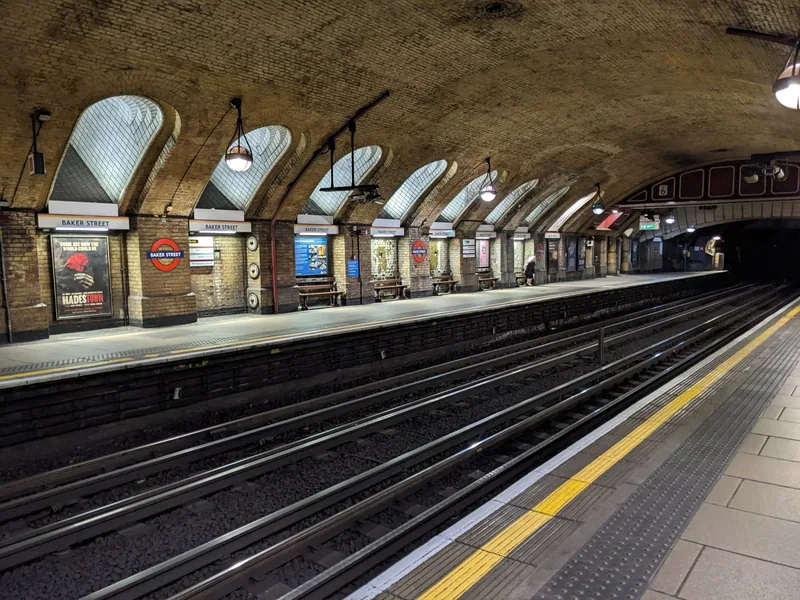
Photo: The wub · CC BY-SA 4.0 · Wikimedia Commons · resized
Making the enquiry
The report is made online. TfL uses a system called NotLost to manage enquiries and records, and the form asks for the service, the route or line, the date and time, where you boarded and where you got off, and a detailed description. Photographs help, as do serial numbers, and for a bag it is worth listing what was inside it.
TfL says it can take up to 15 days to review an enquiry, and longer during busy periods. You will be told either that they believe they have your item, that they need more information, or that they do not have it. There is no faster track, and calling does not exist as an option.
Once a match is confirmed, TfL tells you how to reclaim it: either an appointment at the collection office, which opens for pre-booked slots from Monday to Friday, or delivery by courier. Both attract a fee.
What it costs to get your things back
| Category | Admin fee |
|---|---|
| Laptop or desktop computer, DSLR camera, mobile phone, iPad or tablet | £26.50 |
| Bike, buggy, scooter, pushchair, camera lens, musical instrument, power tool, suitcase, passport or national ID card | £16.00 |
| Personal electronics: e-readers, smart watches, headphones and earbuds, games consoles | £16.00 |
| All other items | £6.50 |
One fee covers multiple items, set by whichever item in the batch carries the highest charge, so a bag containing a laptop and a coat costs £26.50 rather than two fees. TfL says the fees reflect the cost of collecting, cataloguing, storing and restoring property, and that the income goes towards running the office.
Courier delivery is charged separately and depends on the size and weight of the item and where it is going, which for an international address can easily exceed the value of what you lost. For a £6.50 scarf, it is worth asking what the postage would be before agreeing.
What TfL will not keep
Several categories never reach the office at all, which saves you making an enquiry.
- Credit and debit cards are securely destroyed when found, and TfL does not take enquiries about individual cards. Ring your bank instead, straight away.
- Oyster cards and photocards on their own are not kept. Apply for a replacement rather than searching; our guide to Oyster refunds and deposits explains what happens to the credit, and why registering a card matters.
- Lighters, e-cigarettes, food, soiled clothing and flammable substances are not stored, for safety reasons.
A card inside a wallet is a different case: the wallet will be kept, but you should still cancel the cards immediately rather than waiting to see whether the wallet turns up. If your passport is missing, do not wait either: our guide to losing a passport in London explains what your embassy will need, and a found passport carries a £16.00 fee at the Lost Property Office.
Black cabs, minicabs and the driver's award
Property left in a licensed black cab goes to TfL under the London Cab Order 1934, and it is handled in the same way as anything else, with one addition. On top of the admin fee, there is a cab driver's award, paid in full to the driver, which reflects the value of the item and the time and lost fares involved in taking it to a police station or the Lost Property Office.
TfL does not publish a fixed figure for that award, so ask when you are told the item has been found. For anything valuable it can be a meaningful amount, and it is the reason black cab drivers hand things in rather than leaving them.
Minicabs and private hire vehicles, including app-based ones, are not covered. Contact the operator you booked through. The practical lesson, as our guide to black cabs, minicabs and Uber notes, is to keep the booking confirmation until you are safely indoors with everything you started with.
What is not TfL's problem
The Lost Property Office covers a smaller part of London's transport than most people assume.
- National Rail trains and stations are handled by each train operating company separately, not by TfL. Our guide to London's main railway stations will tell you which company runs your route.
- Trams are searched through the MissingX website, and the London Trams Shop is at 5 Suffolk House, George Street, Croydon CR10 1PE.
- River boats are the operator's responsibility; contact them directly. For items left on a pier, TfL's address is river@tfl.gov.uk. Our guide to the river bus explains who runs what on the water.
- Airports, coaches and tour buses are handled by the individual operator. The exception is Victoria Coach Station itself, which TfL runs and which is covered by the main system.
- The London Cable Car is covered, along with the Tube and buses; see our guide to the cable car.
The three-month clock
TfL stores found property for a maximum of three months from the date it was lost. After that, unclaimed items become TfL's property: personal data is removed and destroyed, and the items are donated to charity, recycled, disposed of or sold. TfL does not hold public auctions of unclaimed property, whatever you may have read.
Cash is the exception and can be claimed for up to a year after it was lost, whether it was found loose or inside something else.
For anything of real value, report the loss to your travel insurer at the same time as you report it to TfL, because most policies have their own reporting deadlines that are shorter than three months. Our page on travel insurance for the UK covers what a policy typically requires, and if the item was stolen rather than left behind, that is a police matter: our guide to emergency numbers explains when to call 999 and when to use 101.
Photograph your luggage before you travel. An enquiry is matched on the description, and "a black wheeled suitcase" describes a very large proportion of everything in the store. A photograph, a brand, a distinguishing mark and the contents make the difference between a match and a shrug. Our notes on carrying luggage on the Tube cover the other half of the problem.
Reducing the odds
Most things are left in the same few ways. Bags go on the overhead rack or the floor beside a seat and stay there when their owner stands up at the last moment. Phones slide out of coat pockets on Tube seats. Umbrellas are left the moment it stops raining, which is why they are the single most common item handed in.
Two habits fix nearly all of it. Do not put anything on a seat or a rack that you would mind losing, and give yourself one deliberate look at the seat before you step off. On a bus, that means looking before you reach the stairs, not at the door. Keeping valuables in a front pocket or an inside pocket also removes the other risk, which our guide to staying safe in London covers.
If you are travelling on and need somewhere to put your bags rather than risk carrying them round the city, our guide to left luggage in London lists the station offices and the storage apps.
Frequently asked questions
How do I report something lost on the London Underground?
Report it online through Transport for London's lost property enquiry system. There is no telephone line for enquiries and the office does not accept visitors without an appointment. If you lost the item in the last day or two, also ask staff at the station where you got off, because it may not have been sent on yet.
How much does it cost to get lost property back in London?
£6.50 for most items, £16.00 for larger ones such as suitcases, pushchairs and musical instruments and for passports and national ID cards, and £26.50 for laptops, tablets, phones and DSLR cameras. One fee covers a batch of items, set by the highest-charging item in it. Courier delivery costs extra.
How long does TfL keep lost property?
Three months from the date the item was lost, after which unclaimed property becomes TfL's and is donated, recycled, disposed of or sold. Cash is the exception and can be claimed for up to a year. Personal data is removed and destroyed before anything is passed on.
I left something in a black cab. What happens?
Licensed black cab drivers hand property in to TfL, so it is covered by the same system. On top of the normal admin fee you pay a cab driver's award, which goes in full to the driver and reflects the item's value and the driver's time. Minicabs and app bookings are not covered; contact the operator.
Will TfL keep my bank card or Oyster card if I lose it?
No. Individual credit and debit cards are securely destroyed when found and TfL does not take enquiries about them, so contact your bank immediately. Oyster cards and photocards on their own are not kept either; apply for a replacement instead of searching for the original.
Sources
- Transport for London - Lost property (checked September 2026)
- Transport for London - Lost Property Office schedule of fees, effective April 2026 (PDF) (checked September 2026)
- Transport for London - lost property enquiry system (checked September 2026)
- Transport for London - replacing an Oyster card (checked September 2026)