
Portuguese London is a single road. South Lambeth Road, running north from Stockwell station towards Vauxhall, has been called Little Portugal for forty years, and its cafes, delicatessens and pastry counters are where to eat the food rather than in any restaurant in the centre. Brazilian London is more scattered, and its two set pieces are the all-you-can-eat grill and the buffet priced by weight.
The two are grouped together here because they share a language and almost nothing else on the plate. Portuguese cooking is salt cod, grilled sardines, pork and custard tarts. Brazilian cooking is beef, black beans, cassava and sugar. Our guide to bakeries and pastries in London covers where the pastel de nata has spread to; this page is about where it came from.
If you have read our page on Peruvian and Latin American food, this is the other half of Latin London: the part that speaks Portuguese, drinks stronger coffee and watches different football.
Where to go
- Stockwell and South Lambeth
- South Lambeth Road between Stockwell and Vauxhall. Stockwell is Zone 2 on the Northern and Victoria lines
- Golborne Road
- The northern end of Portobello, W10. An older Portuguese pocket with pastry shops and cafes
- Brazilian London
- Bayswater and Queensway, Willesden and Harlesden in north-west London, and pockets around Stockwell and Brixton
- Order first
- A bifana and a bica in a Portuguese cafe; picanha at a Brazilian grill
- Best day
- Saturday for feijoada in a Brazilian restaurant; Sunday lunchtime on South Lambeth Road
- Custard tarts
- Eaten standing at the counter, warm, with cinnamon shaken over them
- Rodizio
- A fixed price per person agreed before you sit down. Check the restaurant's own menu for the current figure
South Lambeth Road, and the Madeiran connection
The Portuguese community in this part of Lambeth is not simply Portuguese: a large share of it came from Madeira, and that shows on the menus. Espetada, chunks of beef rubbed with garlic and bay and grilled on a skewer cut from a bay-laurel branch, is a Madeiran dish. So is bolo do caco, a flat, soft bread cooked on a stone and served split and dripping with garlic butter. So is poncha, a drink of sugar-cane spirit, honey and lemon that is stronger than it tastes.
The road itself is unglamorous, and that is the point. Within a few hundred metres you pass pastry counters, a fishmonger with salt cod stacked like planks, delicatessens with tins of sardines and bottles of olive oil, cafes with the football on and men drinking coffee at eleven in the morning, and two or three proper restaurants. Stockwell and Vauxhall stations sit at either end, which makes it an easy walk.
Sunday lunchtime is when families eat out and the restaurants fill. Weekday mornings belong to the cafes. Our guide to Brixton, one stop further south, covers what else is in this part of London, and our Underground guide explains the two lines that meet at Stockwell.
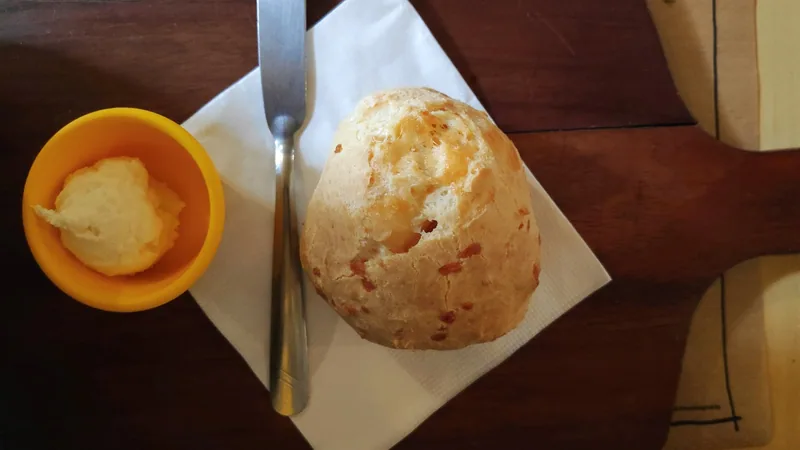
Photo: Melsj · CC BY-SA 4.0 · Wikimedia Commons · resized
How a Portuguese cafe works
These are not cafes in the London sense. You order and pay at the counter, usually standing, and there is a glass case of savoury pastries and a second case of sweet ones. The coffee is espresso unless you say otherwise.
- Bica is a small strong espresso. Galao is a tall glass of milky coffee, the breakfast drink. Meia de leite is the cup version.
- Bifana is thin pork, marinated in garlic and white wine, slapped into a soft roll with mustard or piri-piri. Under five minutes to make and the best cheap lunch on the road.
- Prego is the same idea with steak.
- Bolinhos de bacalhau are salt cod and potato croquettes, eaten cold or warm, one or two at a time.
- Rissois are half-moon pastries filled with prawn or meat in bechamel and fried.
The sweet case holds the pastel de nata, but also bolo de arroz, a rice-flour muffin; queijadas, small cheese tarts; pastel de feijao, a bean and almond tart that tastes of neither; and travesseiros, puff pastry pillows of egg and almond cream. Order two things and a coffee and you will have spent less than on a chain sandwich; our page on cheap eats in London has the wider comparison.
Ask whether the custard tarts have just come out. A pastel de nata is a different object warm and cold. The pastry is meant to shatter and the custard to be barely set, and both of those stop being true within an hour or two. Portuguese counters bake in batches through the day and will tell you when the next lot is due. Cinnamon and icing sugar sit on the counter for you to add yourself.
The Portuguese dishes worth a proper meal
Bacalhau, salt cod, is the national obsession, and the two versions you will meet most are bacalhau a bras, shredded cod with straw potatoes, onion and egg stirred together, and bacalhau com natas, baked with cream. Neither tastes strongly of salt; the fish is soaked for a day or more before cooking.
Beyond that: caldo verde, a green soup of potato, shredded cabbage and a slice of smoked sausage; frango piri-piri, butterflied chicken grilled with chilli oil, which is the dish the high-street chains copied; arroz de marisco, a wet seafood rice served in the pot; and grilled sardines in summer, eaten with bread and boiled potatoes and nothing else. Our page on seafood and oysters in London covers the city's fish more generally.
Portuguese wine is the great bargain of these restaurants. Vinho verde is light, faintly fizzy and low in alcohol; the reds from the Douro and the Alentejo cost a fraction of what comparable French bottles do. Madeira, fortified and cooked as part of its production, is worth trying by the glass at the end of a meal. Our guide to where to drink wine in London deals with the city's specialist rooms; the Portuguese restaurants simply put the bottle on the table.
Golborne Road, the other Portuguese street
The northern end of Portobello Road, where it becomes Golborne Road, has a smaller and older Portuguese and Moroccan mix. A couple of the pastry counters there are among the longest-established in London and are busy from early morning, with a queue out of the door on a Saturday.
It is a useful stop if you are already at Portobello Road Market on a Friday or Saturday, and a far better breakfast than anything sold to tourists further down the hill. Our guide to Notting Hill explains how the two ends of that long street differ.
Brazilian London: the grill and the scales
Brazilian eating in London takes two forms, and both are priced in a way that confuses people the first time.
The first is the churrascaria, or rodizio. You pay one price per person, help yourself to a salad and hot buffet, and waiters then circulate with skewers of grilled meat, carving slices onto your plate until you tell them to stop. The signal is a small card on the table, green on one side and red on the other: green means keep coming, red means enough for now. The meat to wait for is picanha, the rump cap, which is the best cut on the skewer and rarely the first to appear.
The second is the buffet por quilo: a self-service counter where you fill a plate, hand it over to be weighed, and pay by weight. It is the everyday Brazilian lunch, it rewards people who take less rice, and it is one of the cheapest hot meals in London.
At a rodizio, turn the card red early. The cheap cuts, chicken, sausage, garlic bread, come round first and constantly, and the picanha, rump and lamb come later and less often. Take one slice of the early skewers, then show red until the good meat appears. The buffet is included in the price but works against you for the same reason; treat it as a side dish.
What Brazilians actually eat, away from the grills
Feijoada is the dish, and in Brazil it belongs to Saturday: black beans stewed with salted and smoked pork, served with rice, shredded kale, toasted cassava flour called farofa and slices of orange. London's Brazilian restaurants keep the Saturday habit, so that is the day to go.
The everyday food is savoury snacks sold by the piece from a glass case: coxinha, a teardrop of shredded chicken in dough, breaded and fried; pastel, a large thin fried pastry; pao de queijo, small cheese rolls made with cassava starch, which are naturally wheat-free and addictive; and kibe, borrowed from Lebanese immigration to Brazil. Moqueca, a coconut and palm-oil fish stew, is the dish from Bahia worth ordering if you see it.
Sweet: brigadeiro, a truffle of condensed milk and cocoa rolled in sprinkles, sold at every counter; acai, blended frozen berry pulp served as a thick bowl with banana and granola; and guarana, a sweet fizzy drink made from an Amazonian berry. Caipirinha, cachaca with lime and sugar, is the cocktail. Our guide to desserts and chocolate in London covers the rest of the city's sweet end.
The shops are in Bayswater and around Queensway, and in Willesden and Harlesden further out; see Paddington and Bayswater. Several double as travel agents and money transfer desks, as immigrant food shops tend to.
Coffee, football and the unwritten timetable
Both communities run their cafes around football. A Portuguese cafe on South Lambeth Road on a Benfica or Sporting night is a different room from the same cafe on a Tuesday morning, and a Brazilian bar during a Brazil match is not a place to try to have a quiet conversation. Neither is unwelcoming; both are loud. Our guide to football in London covers the English game, which is also on these screens most weekends.
The coffee is worth a note of its own. Portuguese espresso is roasted darker and pulled shorter than the Italian-influenced standard described in our guide to coffee in London, and it costs around half what a flat white costs in Shoreditch. Brazilian coffee in Brazilian cafes is usually served sweet unless you say otherwise.
Vegetarians, allergies and children
Portuguese menus are difficult for vegetarians: fish, pork and chicken carry almost everything, and even the soups often start with sausage. Cheese, bread, salads, grilled vegetables and the sweet counter will get you through a meal. Brazilian buffets are easier, because the por quilo counter always has beans, rice, farofa, salads and cassava. See vegan and vegetarian London.
Salt cod is fish, and it is in more dishes than the names suggest. Eggs are central to Portuguese pastries. Almonds appear in several tarts. Pao de queijo and farofa are made from cassava rather than wheat, which makes a Brazilian buffet unusually workable for people avoiding gluten, though bread and pastries on the same counter mean cross-contamination; see gluten-free eating in London.
Both are excellent for families. Nothing is hot except the piri-piri you add yourself, portions are large, and a rodizio is one of the few restaurants where a teenager's appetite is an advantage rather than an expense. Our family guide to London has more, and brunch in London covers the late-morning option if a Portuguese cafe breakfast appeals.
Frequently asked questions
Where is Little Portugal in London?
South Lambeth Road, between Stockwell and Vauxhall stations in the borough of Lambeth. A run of cafes, pastry counters, delicatessens, a fishmonger and several restaurants sits along it. A second, older Portuguese pocket is on Golborne Road at the north end of Portobello.
What is a rodizio and how does it work?
A Brazilian grill where you pay one price per person. You help yourself to a buffet, and waiters bring skewers of grilled meat to the table and carve slices onto your plate. A card on the table, green one side and red the other, tells them whether to keep coming or to pause.
When is feijoada served in London?
Usually on Saturdays, following the Brazilian habit. Feijoada is black beans stewed with salted and smoked pork, served with rice, shredded kale, toasted cassava flour and orange slices. Some restaurants also run it on Wednesdays; ring ahead if you are making a journey for it.
What is the difference between Portuguese and Brazilian food?
Portuguese cooking centres on salt cod, pork, grilled fish, soups and egg-rich pastries. Brazilian cooking centres on grilled beef, black beans, cassava and sugar, with Lebanese, Japanese and African influences absorbed along the way. They share a language, coffee habits and very little else.
What should I order in a Portuguese cafe?
A bifana, which is marinated pork in a soft roll, with a bica, a small strong espresso. Follow it with a pastel de nata, warm if the counter has a fresh batch, and shake the cinnamon over it yourself. All three together cost very little.
Sources
- Transport for London - Fare capping (checked September 2026)
- Food Standards Agency - Food allergy and intolerance advice for consumers (checked September 2026)
- Food Standards Agency - Food hygiene ratings search (checked September 2026)
- GOV.UK - Weights and measures: specified quantities (checked September 2026)